Bedford, UK


Supporting Executive Function Skills at Home
Executive function skills are the mental processes that help us plan, organise, remember information, manage time and complete tasks. For many children, particularly those with ADHD, dyslexia, dyscalculia or autism, these skills do not always develop as naturally as parents might expect. As a result, everyday tasks can sometimes feel overwhelming, even when a child is intelligent, motivated and eager to succeed.
Over the years, I have worked with many learners who have struggled with executive functioning. Interestingly, these challenges often appear in ways that adults don’t immediately recognise. A child may forget instructions moments after hearing them, lose track of their belongings, struggle to start a task or become overwhelmed by seemingly simple routines.
As someone with ADHD myself, I understand how frustrating this can feel. Sometimes the challenge is not knowing what needs to be done; it’s knowing how to begin, where to focus attention and how to keep information active in working memory long enough to complete the task. Fortunately, there are many practical ways parents can support executive function skills at home.
The Power of Colour-Coding
One strategy I use regularly is colour-coding.
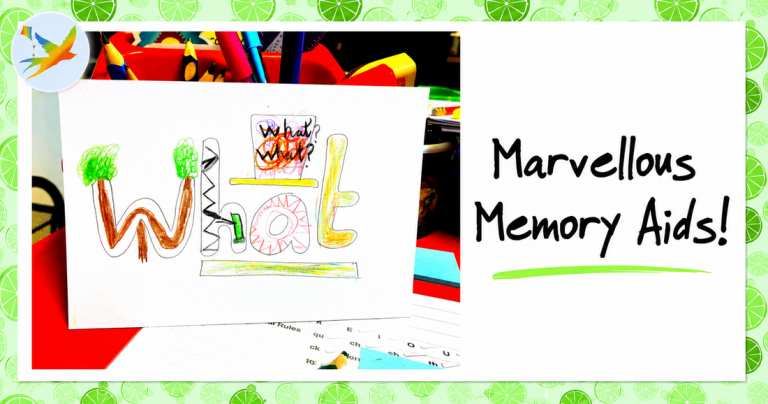
Many children find it easier to remember information when strong visual links are created. Colour-coding helps learners organise information in a way that makes it easier for the brain to encode and retrieve later.
For example, we might always highlight verbs in one colour, nouns in another and adjectives in a third. In maths, different colours can be used to represent place value, operations or steps within a calculation.
I often find that children begin recalling information more quickly because the colour itself acts as a memory cue. Rather than trying to retrieve information from a sea of black-and-white text, the brain has an additional visual pathway to follow.
For many neurodivergent learners, these visual associations can make a remarkable difference to both confidence and retention.
Developing Working Memory Through Games
Working memory is one of the executive function skills I support most frequently.
Many children with ADHD and other learning differences struggle to hold information in their minds whilst carrying out another task. This can make following instructions, solving problems and completing multi-step activities much more difficult.
The good news is that working memory can often be strengthened through enjoyable activities.
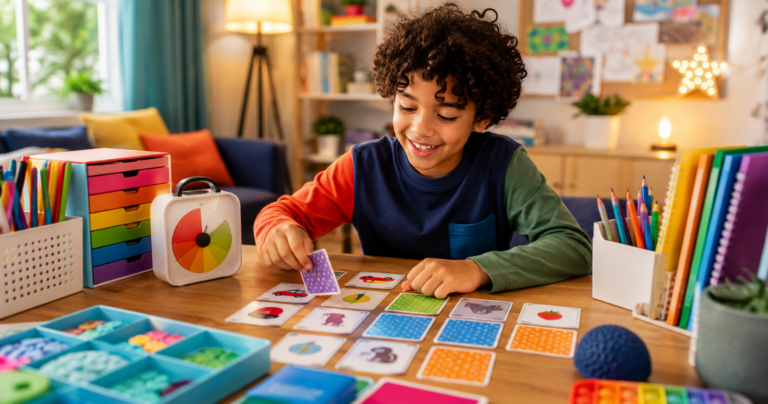
One of my favourite approaches is using matching pairs games. Whilst children simply see a fun game, they are actually practising remembering locations, holding information in mind and recalling it when needed.
I often tell parents that some of the best learning doesn’t look like learning at all.
Memory games, card games, sequencing activities and simple recall challenges can all help strengthen working memory whilst keeping children engaged and motivated. These activities are particularly useful during the summer holidays when families want to maintain skills without recreating a classroom environment.
Turning Everyday Tasks Into Games
One of the biggest executive function challenges many children face is task initiation.
In simple terms, getting started.
Children often know they need to complete a task but struggle to begin. This is especially common in learners with ADHD.
One strategy I use regularly is gamification.
Rather than saying, “Go and clean the sink,” we can transform the task into a challenge.
Can you finish cleaning the sink before your favourite song ends?
Suddenly, the task feels completely different.
The activity now has a clear goal, a time limit and an element of fun. The brain receives immediate feedback and motivation, making it far easier to get started.
The same approach can be used throughout the home:
Can you put away ten toys before the chorus starts?
Can you beat your previous bedroom-tidying record?
Can you complete your reading challenge before the timer runs out?
Many children who resist traditional instructions respond incredibly well when tasks become games.
As someone who works with many ADHD learners, I regularly see how powerful this can be. The ADHD brain is often highly motivated by novelty, challenge and immediate rewards. By making everyday activities more engaging, we can reduce resistance and build valuable executive function skills at the same time.
Building Confidence Alongside Skills
Perhaps the most important thing to remember is that executive function difficulties are not a sign of laziness or a lack of intelligence.
Many children work incredibly hard simply to stay organised, remember instructions or complete everyday routines. When adults understand this, we can move away from frustration and towards support.
Small changes such as colour-coding, memory games and gamified routines can help children develop skills gradually whilst protecting their confidence.
Executive functioning rarely improves overnight. However, with patience, consistency and plenty of encouragement, children can make remarkable progress.
Sometimes the greatest gift we can give a child is helping them discover that there are strategies which work with their brain rather than against it. As I often tell my students, success isn’t about forcing yourself to learn like everyone else. It’s about finding the tools that help you shine. This philosophy has shaped much of my work with neurodivergent learners and reflects my belief that every child’s learning journey is unique.
Here at Bedford Tutor, I have supported many children with ADHD, dyslexia, dyscalculia, autism and executive functioning difficulties both in the UK and around the world. Through highly personalised lessons, engaging activities and practical strategies, I help learners develop the organisation, memory and confidence they need to become more independent learners.
To find out more, please click on the relevant link below:
Bel 😊