Bedford, UK



Morphology for Dyslexia: Powerful Ways to Improve Spelling
When most people think about improving spelling, they imagine practising word lists over and over again.
For many children, particularly those with dyslexia, that approach can quickly become repetitive, frustrating and, ultimately, ineffective.
Over the years, I’ve found that one of the best ways to help children become more confident spellers is to help them understand why words are built the way they are. Rather than relying solely on memorisation, we explore the building blocks of language itself.
This is where morphology becomes such a powerful learning tool.
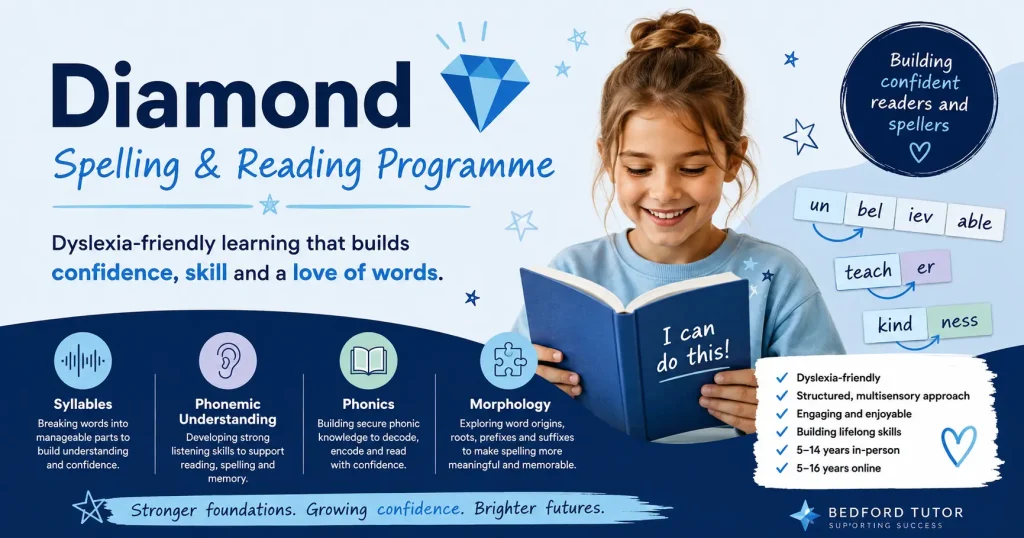
Although we’ve been incorporating elements of morphology into our tuition for many years through our Diamond Spelling & Reading Programme, from September we’ll be expanding this aspect of our lessons even further, giving children even more opportunities to discover the fascinating stories hidden inside words.
What Is Morphology?
Morphology is simply the study of the parts that make up words.
Many English words are built from prefixes, suffixes and root words. Once children begin to recognise these patterns, spelling starts to feel far less random.
Instead of seeing a long, unfamiliar word as one enormous challenge, they begin to spot familiar pieces they already know.
For example, understanding that helpful, careful and playful all share the suffix -ful helps children make connections between words rather than learning each one in isolation.
Likewise, recognising prefixes such as un-, re- or dis- allows children to decode and spell new vocabulary with much greater confidence.
Rather than memorising hundreds of individual spellings, they start recognising the patterns that link them together.
Why Morphology Can Be Particularly Helpful for Dyslexic Learners
Many children with dyslexia are excellent pattern spotters.
Once they begin recognising how words fit together, spelling often becomes much more logical and far less overwhelming.
Instead of asking, “How do I remember this word?”, they begin asking, “What parts can I already recognise?”
That small shift in thinking can make a remarkable difference.
Morphology also supports vocabulary development and reading comprehension. As children learn what different roots and affixes mean, they often find it much easier to work out the meanings of unfamiliar words when reading independently.
It’s another example of one skill supporting several areas of literacy at once.
Making Spelling Memorable Through Creativity
One thing I’ve learnt over the years is that children rarely remember something simply because they’ve copied it twenty times.
They remember experiences.
That’s why creativity plays such an important role in my lessons.
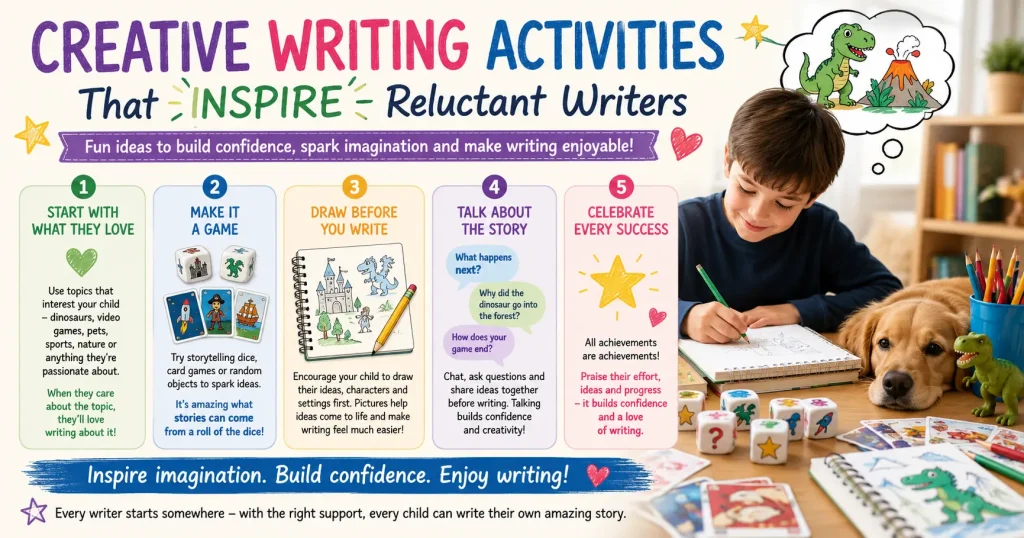
If we’re learning a new root word, we might draw it as a cartoon character. If we’re exploring a prefix, we may invent a silly story explaining where it came from. Sometimes we’ll create ridiculous sentences that make everyone laugh, because humour has a wonderful way of helping information stick in our memories.
Drawing, storytelling and imaginative activities transform spelling from something children have to do into something they actually enjoy.
Many neurodivergent learners are highly visual thinkers, and creating funny images or memorable stories often helps words stay in long-term memory far more effectively than repetition alone.
The more senses involved in learning, the more opportunities the brain has to create lasting connections.
Learning Should Be Fun
This has always been one of my guiding principles.
Children learn best when they are engaged.
Over the years, we’ve used games, visual resources, discussion, word-building activities and creative challenges to help children understand how English works. Morphology has quietly been part of that process for a long time, even if we haven’t always labelled it as such.
From September, however, we’ll be placing an even greater emphasis on exploring word families, roots, prefixes and suffixes in a structured but highly creative way.
The aim isn’t simply to improve spelling accuracy.
It’s to help children become curious about language.
When children begin asking questions like, “Why does that word end like that?” or “Where did this word come from?”, they’re no longer just memorising spellings. They’re becoming language detectives.
Looking Ahead to September
One student I’m particularly excited to continue working with is a wonderful young learner I tutor online in Dubai, UAE.
We’ve already made fantastic progress in developing confidence with reading and spelling, and from September we’ll be exploring morphology in much greater depth together. I can’t wait to see the connections they begin making as they discover how words are built and how those patterns can make spelling both easier and far more enjoyable.
Watching those moments of understanding is one of the greatest pleasures of teaching.
Suddenly, words that once seemed impossible begin to make sense.
Confidence grows.
And perhaps most importantly of all, children begin to realise that spelling isn’t simply about remembering random letters. It’s about understanding a wonderfully interconnected language that is full of patterns, history and fascinating discoveries waiting to be explored.
Here at Bedford Tutor, I have been supporting children with dyslexia, ADHD and other special educational needs for many years through highly personalised English tuition. As part of our Diamond Spelling & Reading Programme, we’ll be expanding our work on morphology from September, helping children discover the building blocks of words through creative, engaging and multi-sensory activities that make spelling both memorable and enjoyable.
To find out more, please click on the relevant link below:
Bel 😊