Bedford, UK


When a child is diagnosed with dyslexia, many parents experience a mixture of emotions.
For some, there is relief. Finally, there is an explanation for why reading, spelling or writing has felt so much harder than expected. For others, there is worry.
How can I help my child?
Will they ever become a confident reader?
What should we be doing at home?
The good news is that dyslexic children can absolutely thrive.
Over the years, I have worked with many learners with dyslexia and one thing has become incredibly clear to me: the most effective support rarely looks like endless worksheets and repetitive drills. In fact, some of the best learning happens when children are actively involved, using their hands, their imagination and their creativity.
Many dyslexic learners are naturally curious, creative and highly capable thinkers. However, because reading and spelling can require so much effort, they can sometimes begin to doubt their abilities. This is why praise is so important.
I cannot overstate the power of helping a child recognise their own progress.
When a child has spent years feeling as though they are falling behind, celebrating small successes can make a remarkable difference. Sometimes learning confidence grows in tiny increments, like drops of water filling a bucket. One correctly-spelled word. One successful reading activity. One moment when a child suddenly realises, “Actually, I can do this.”
These moments matter.
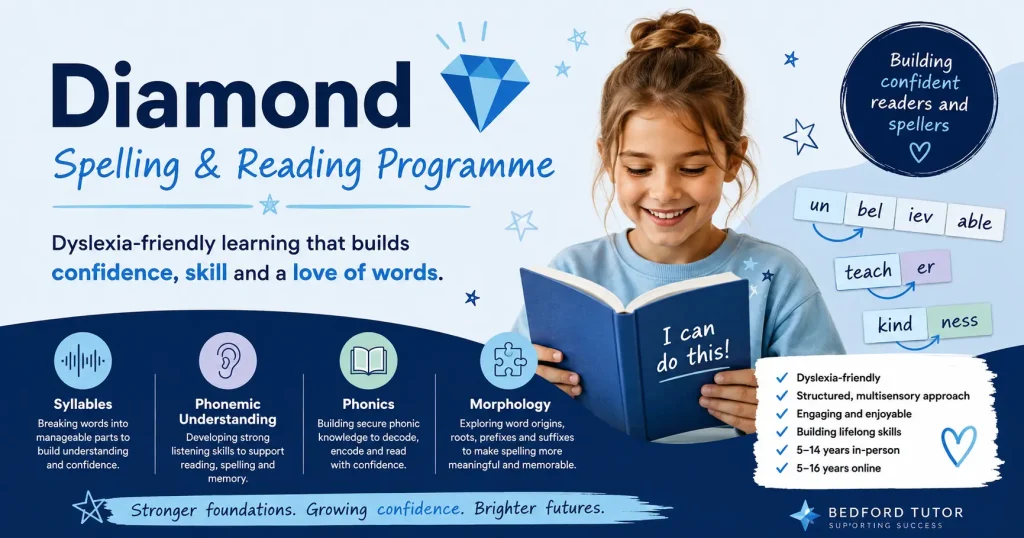
At Bedford Tutor, our Diamond Spelling & Reading Programme was designed with this philosophy in mind. Rather than expecting children to memorise endless lists of spellings, we help them understand how words actually work.
One area we focus on heavily is syllables.
Many struggling readers see long words as giant mountains standing in their path. However, when children learn to break words into syllables, those mountains often become a series of smaller hills. Suddenly, words which once looked overwhelming begin to feel much more manageable.
We also spend a great deal of time exploring vowel sounds.
English spelling can sometimes feel wonderfully logical and completely chaotic at exactly the same time. As children begin to understand how vowel sounds influence spelling patterns, many start to recognise that there are actually reasons behind many spellings. Whilst English certainly has its fair share of exceptions, understanding common spelling rules helps children approach unfamiliar words with greater confidence.
Most importantly, we make learning physical.
Many dyslexic learners benefit enormously from seeing, hearing, saying and physically manipulating words.
This is why we regularly use play dough, wooden blocks, magnetic letters and other hands-on resources to build words physically. Rather than simply looking at a word on a page, children can hold it, move it, change it and explore how it works. Learning becomes something tangible rather than something abstract.
I often find that once a child can physically construct a word, they begin to understand it in a completely different way.
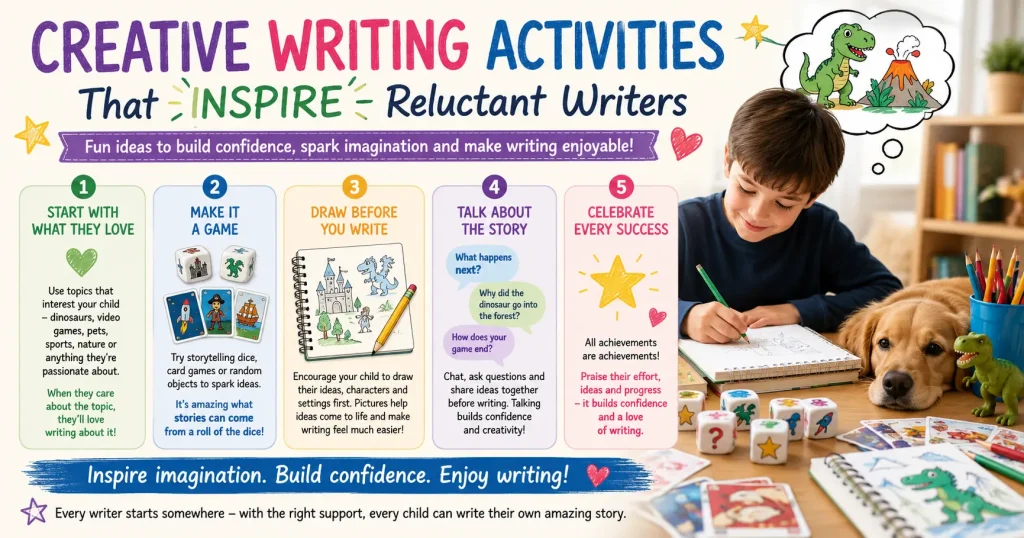
Creativity also plays a huge role in our sessions.
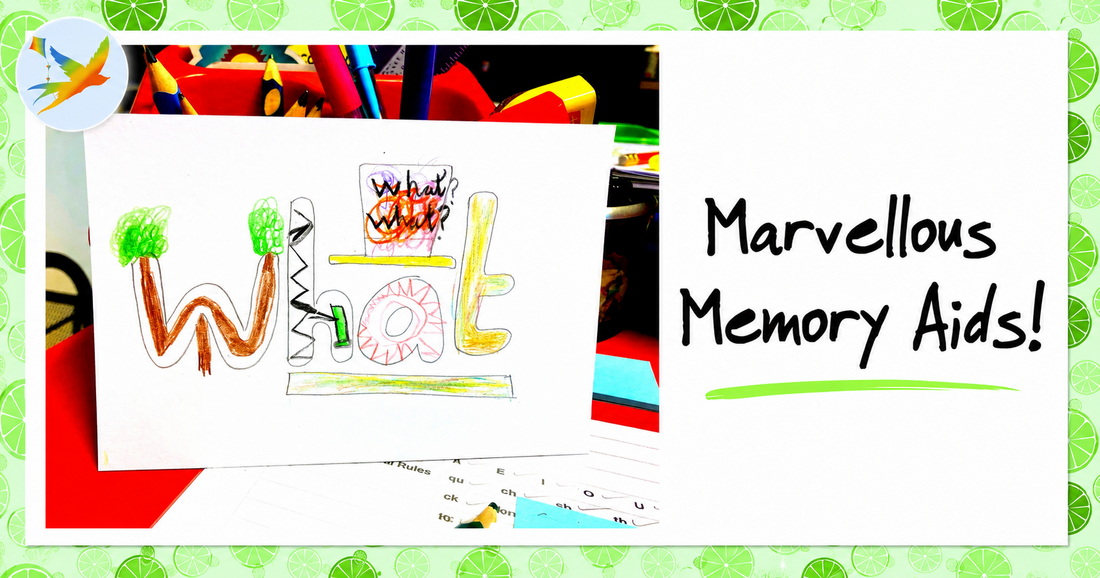
One of my favourite approaches involves turning words into pictures.
For example, if we are exploring the word “what”, we might notice that it contains the word “hat”. Suddenly, we can draw a hat directly onto the letters. The word becomes more memorable because it is no longer just a collection of symbols. It becomes an image, a story and an idea.
Dyslexic learners are often wonderfully visual thinkers and these creative associations can help words stick in the memory far more effectively than simple repetition.
Over the years, I have seen children transform their confidence through approaches like these. Not because they suddenly become perfect spellers overnight, but because they begin to understand that reading and spelling are skills they can learn.
Supporting a dyslexic learner at home is not about creating a second school environment. It is about nurturing confidence, celebrating effort and helping children discover strategies which work for their unique brains.
After all, dyslexia is not a lack of intelligence. Some of the most creative, innovative and inspiring people throughout history have been dyslexic. Sometimes children simply need the right tools, the right encouragement and someone who believes in them long before they learn to believe in themselves.
When we combine understanding, creativity and plenty of praise, remarkable things can happen.
Here at Bedford Tutor, we have been supporting children with dyslexia and related special educational needs for over fourteen years. Through working with hundreds of learners, I have developed a highly creative and multi-sensory approach which helps children build confidence whilst developing the key literacy skills they need to succeed.
To find out more, please click on the link below:
Bel 😊