Bedford, UK


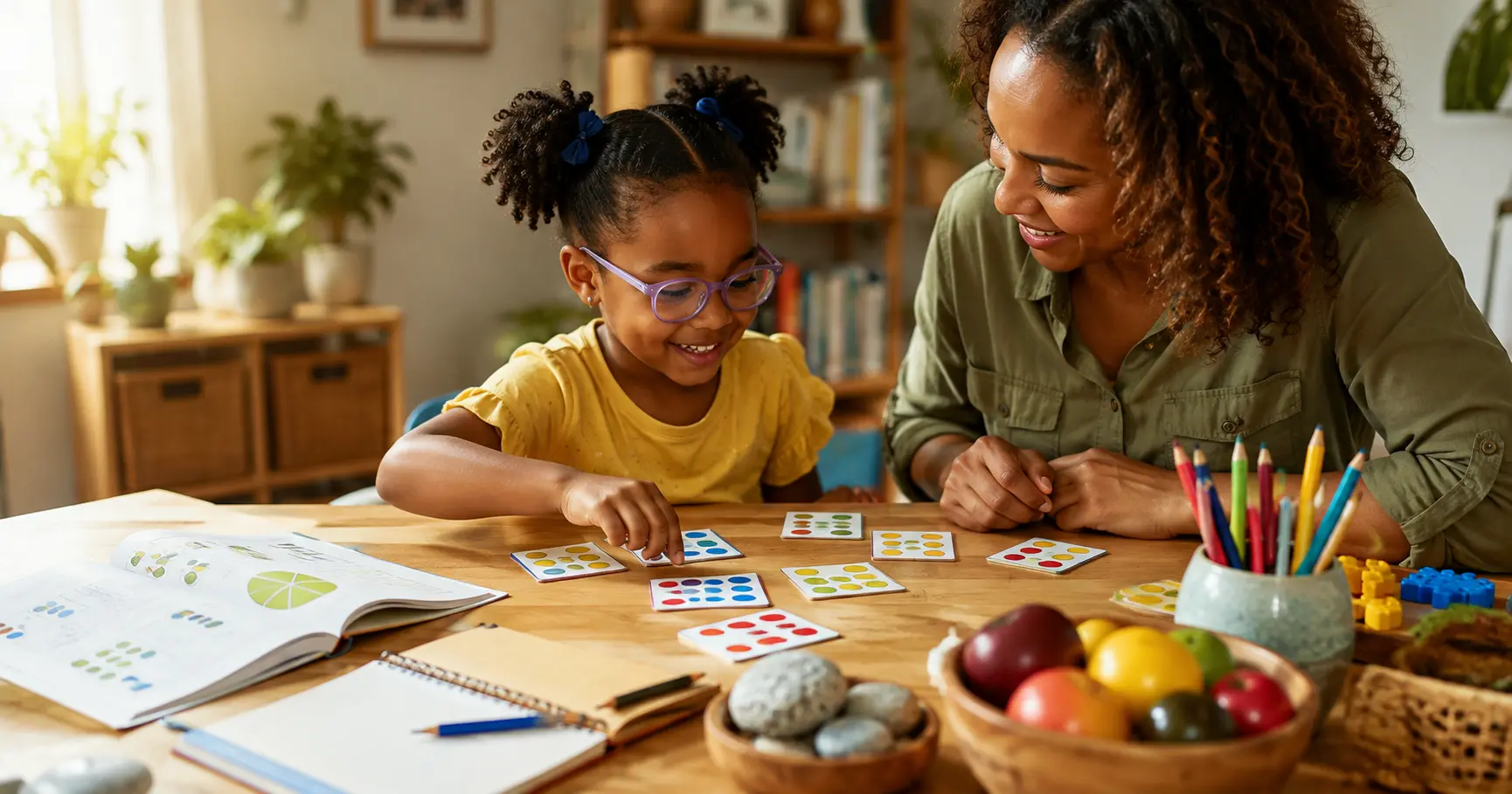
Confidence and maths don’t always seem to go hand in hand.
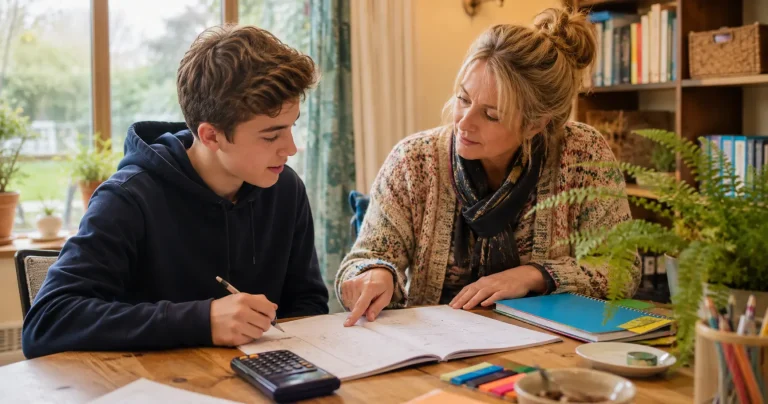
Over the years, I’ve met countless children who happily tackle a tricky reading comprehension but freeze the moment they see a page of calculations. Some will quietly whisper, “I’m just not good at maths,” whilst others become anxious before we’ve even looked at the first question.
The interesting thing is that very few of these children actually lack mathematical ability.
More often than not, what they’re lacking is confidence.
Once children begin believing they “can’t do maths”, that belief can quickly become the biggest obstacle to their progress. Fortunately, confidence isn’t something children either have or don’t have. Like mathematical skills themselves, it can be developed with the right support, encouragement and experiences.
Why Maths Confidence Matters
Primary school is where children build the foundations for future mathematical learning.
Whether they’re learning number bonds, multiplication tables, fractions or problem-solving, every new concept builds on previous knowledge. When confidence is low, children often avoid taking risks, rush through questions or give up before they’ve really started.
I’ve found that many children who struggle in maths aren’t afraid of numbers themselves. They’re afraid of making mistakes.
That fear can become surprisingly powerful.
A child who worries about getting an answer wrong may stop volunteering answers in class, avoid challenging questions or rely heavily on adults for reassurance. Over time, this can create the impression that maths is simply “not their subject”, when in reality they’re capable of much more than they realise.
Celebrate Effort, Not Just Correct Answers
One of the most effective ways to build confidence is to praise effort rather than perfection.
Imagine two children tackling the same problem. One gets the correct answer immediately. The other makes several mistakes but perseveres until they finally understand the method.
Which child has learnt more?
Quite often, it’s the second.
Learning maths involves making mistakes. Every incorrect answer provides information about what a child understands and what still needs developing.
When children realise mistakes are a normal part of learning rather than something to fear, they become much more willing to have a go.
Simple comments such as:
- “I really like how you kept trying.”
- “You chose a good strategy.”
- “Let’s work out together where it went wrong.”
can have a far greater impact than simply saying, “Well done.”
Make Maths Practical
Young children naturally learn through doing.
Abstract numbers on a worksheet can sometimes feel confusing, but place the same mathematical concept into a real-life situation and everything suddenly becomes much clearer.
Cooking together provides wonderful opportunities to explore measurement, fractions and weighing.
Shopping encourages children to estimate costs, compare prices and calculate change.
Building with bricks develops understanding of shape, patterns and spatial reasoning.
Even setting the table can become an opportunity to practise counting, multiplication and sharing equally.
When maths becomes part of everyday life, children begin to see that it has purpose beyond the classroom.
Build Confidence Through Small Successes
One of the biggest mistakes adults sometimes make is moving on too quickly.
Children need opportunities to experience success.
If every activity feels just beyond their current ability, confidence gradually begins to fade.
Instead, try to create a series of achievable challenges.
Perhaps today your child confidently adds two-digit numbers.
Tomorrow they might tackle three-digit numbers with support.
Next week they may begin solving simple word problems using the same skills.
These small successes gradually build into genuine mathematical confidence.
I’ve often seen children who initially describe themselves as “bad at maths” completely change their attitude after a few weeks of carefully structured learning. Nothing magical has happened. They’ve simply experienced enough success to start believing in themselves.
Keep Learning Enjoyable
One of my favourite ways to teach primary maths is through games.
Children often don’t realise how much mathematical thinking they’re doing when they’re enjoying themselves.
Card games encourage number recognition and quick mental calculations.
Board games develop counting, strategy and logical thinking.
Dice games build fluency with addition, subtraction and multiplication.
Even simple treasure hunts can involve measuring distances, following coordinates or solving mathematical clues.
When learning feels fun, children become much more willing to tackle new challenges.
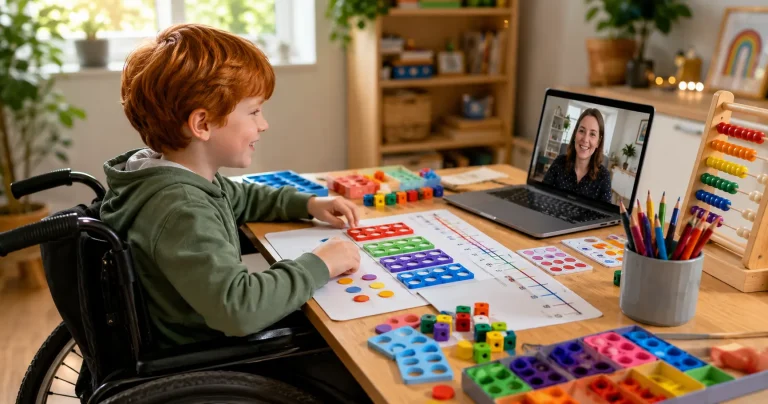
This is particularly true for many neurodivergent learners, including children with ADHD, dyscalculia and autism, who often respond brilliantly to interactive, engaging activities rather than repetitive worksheets. Creating enjoyable learning experiences has always been central to my approach because motivation and confidence often grow together.
Encourage Mathematical Talk
Sometimes children know far more than they realise.
Instead of immediately asking for the answer, ask questions such as:
- “How did you work that out?”
- “Can you explain your thinking?”
- “Is there another way to solve it?”
- “How do you know your answer makes sense?”
Talking through mathematical thinking helps children organise their ideas whilst giving adults valuable insight into any misconceptions.
It also reinforces an important message:
Maths isn’t just about getting the right answer.
It’s about understanding.
Every Child Learns Differently
As someone who has worked with many children with ADHD, dyscalculia, dyslexia and autism, I’ve learnt that no two learners approach maths in exactly the same way.
Some children benefit from visual models.
Others need practical resources they can physically move.
Some need learning broken into smaller chunks, whilst others thrive when mathematical concepts are linked to their favourite interests.
The key is flexibility.
Rather than expecting every child to learn through one method, we should adapt our teaching to suit the learner sitting in front of us. This personalised, strengths-based approach is something I’ve found particularly valuable when supporting children with additional learning needs.
Confidence Lasts Longer Than Correct Answers
One thing I often remind parents is that confidence isn’t built in a single lesson.
It develops gradually through hundreds of positive learning experiences.
Each encouraging conversation.
Each problem solved.
Each moment when a child says, “I did it!”
Those moments matter far more than many people realise.
After all, children who believe they can succeed are far more likely to persevere when learning becomes challenging.
And that resilience will support them long after they’ve forgotten how to calculate fractions or complete long multiplication.
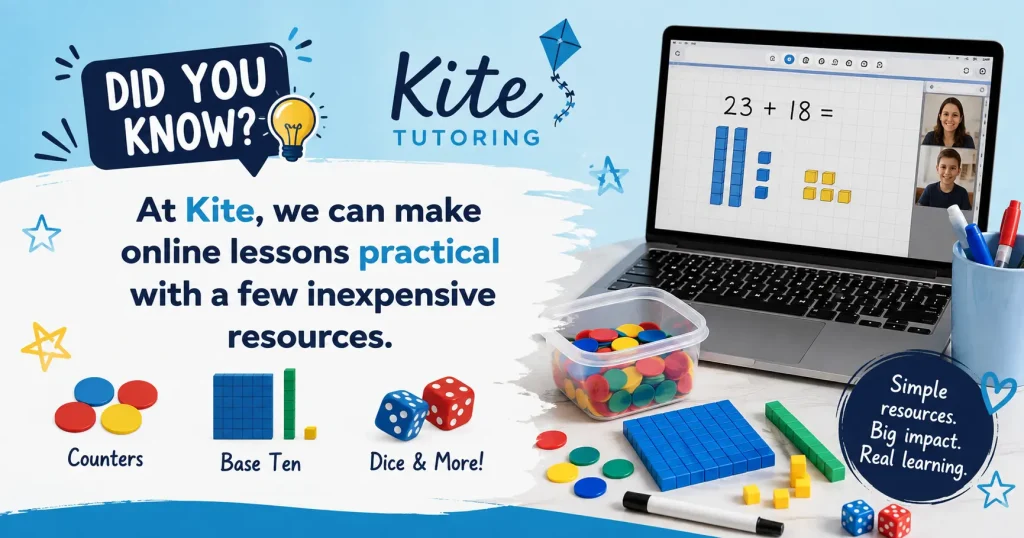
Here at Bedford Tutor and Kite Tutoring (the online division of Bedford Tutor), we have supported children in developing confidence in maths for many years. Whether a learner needs help with number sense, problem-solving, confidence building or support for ADHD, dyscalculia, dyslexia or autism, our personalised lessons are designed to make mathematics engaging, accessible and enjoyable. Every child deserves to feel capable of succeeding in maths, and with the right encouragement, they often achieve far more than they ever believed possible.
To find out more, please see below:
Bel 😊