Bedford, UK



Today marks six years since I was diagnosed with Combined ADHD.
It’s strange really, because in some ways it feels like yesterday, and in other ways it feels as though I’ve lived an entirely different lifetime since that appointment.
The date has always carried extra meaning for me because it’s also my late grandmother’s birthday. She was one of those people who believed in me long before I fully believed in myself. I’d like to think she’d be proud—not because I have ADHD, of course, but because of what I’ve chosen to do with the understanding that diagnosis gave me.
Looking back now, I don’t really see my diagnosis as the beginning of my ADHD journey.
It was the beginning of my self-understanding.
For 31 years, I thought I was the problem
Before my diagnosis, I spent decades trying to work out why some things seemed so effortless for other people but felt exhausting for me.
Why could I happily spend twelve hours hyperfocused on something I loved, yet struggle to answer an email?
Why did my brain collect ideas like a magpie collecting shiny objects?
Why did people describe me as enthusiastic, energetic and creative, yet also tell me I needed to slow down, listen more carefully and stop rushing?
The answers had actually been following me around since childhood.
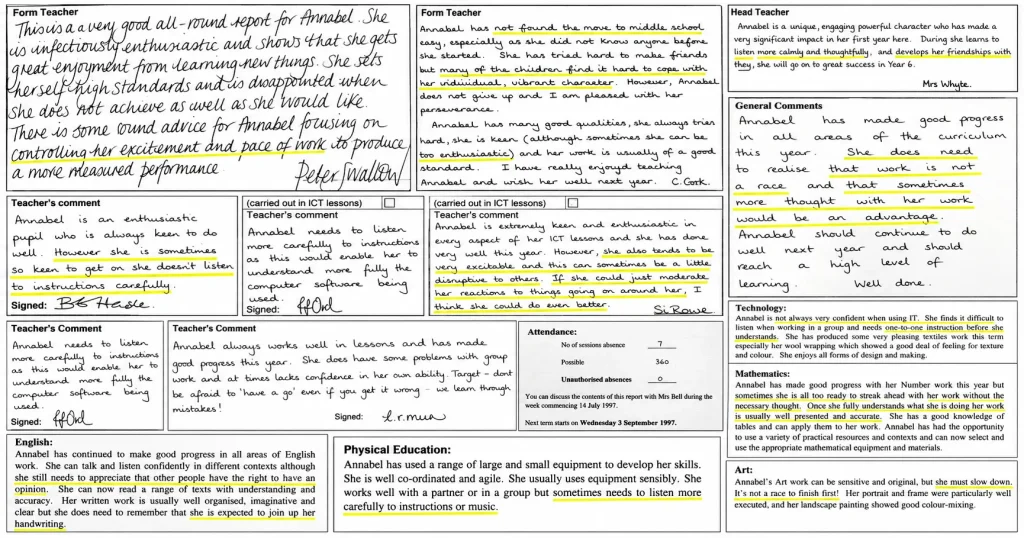
When I requested my old school reports before my assessment, I expected to find the occasional comment.
Instead, I found pages and pages of teachers describing the same child.
“Infectiously enthusiastic.”
“Needs to listen more carefully.”
“Too keen to get on.”
“Must slow down.”
“Controlling her excitement.”
“Work is not a race.”
Reading those reports as a 31-year-old was emotional.
Not because they criticised me.
Because they saw me.
Long before ADHD was even mentioned, they were describing exactly the same traits that would eventually contribute to my diagnosis.
When my psychiatrist assessed me in July 2020, it wasn’t based on one conversation. It drew together my childhood reports, detailed questionnaires, information from my mum and my own lifelong experiences before confirming Combined ADHD.
Suddenly, thirty-one years of confusion began to make sense.
My diagnosis didn’t change who I was
People sometimes imagine receiving an ADHD diagnosis changes everything overnight.
It doesn’t.
I didn’t wake up the next morning with a different brain.
I was still the same person who became fascinated by new ideas.
The same person who interrupted because my excitement arrived before my patience.
The same person who could lose an afternoon researching one tiny question I’d accidentally asked myself.
The diagnosis didn’t change me.
It changed the way I understood myself.
Instead of asking,
“What’s wrong with me?”
I started asking,
“What works for me?”
That tiny shift changed everything.
The biggest surprise wasn’t the diagnosis…
…it was realising how hard I’d been working just to appear “normal.”
Like many women with ADHD, I’d developed coping strategies without even realising it.
Systems.
Lists.
Routines.
Calendars.
Colour coding.
Structure.
From the outside, people often assumed I couldn’t possibly have ADHD because I ran a business, arrived on time and appeared organised.
What they couldn’t see was the amount of energy it took to hold all those systems together.
Looking back, I wasn’t organised because ADHD hadn’t affected me.
I was organised because I had spent years building scaffolding around the parts of my brain that found organisation difficult.
ADHD has shaped my work in ways I never expected
One of the biggest gifts my diagnosis gave me was understanding why I connected so naturally with so many of the children I teach.
Long before I knew I had ADHD myself, I was already drawn towards children who learned differently.
The child who couldn’t sit still.
The child who had brilliant ideas but couldn’t get them onto paper.
The child who had been told they talked too much.
The child whose confidence had quietly disappeared because school had become a place where they constantly felt they were getting things wrong.
Now I understand why.
I recognise so much of myself in them.
Not every child with ADHD is the same—I often say, “My ADHD isn’t your ADHD.” We all experience it differently. But understanding my own brain has made me a better tutor, a better listener and, I hope, someone who helps children feel understood rather than judged.
Six years later…
People sometimes ask whether I still think about my diagnosis.
The answer is yes.
Not because I question it anymore.
Quite the opposite.
Every so often, I’ll stumble across another childhood memory, another school report or another family story and think,
“Well… that makes sense now.”
It’s almost amusing how many clues there were.
The child who was constantly told to slow down.
The teenager whose enthusiasm was often bigger than the room.
The adult who built a business around curiosity, creativity and helping other people.
The signs were there all along.
I just didn’t know what I was looking at.
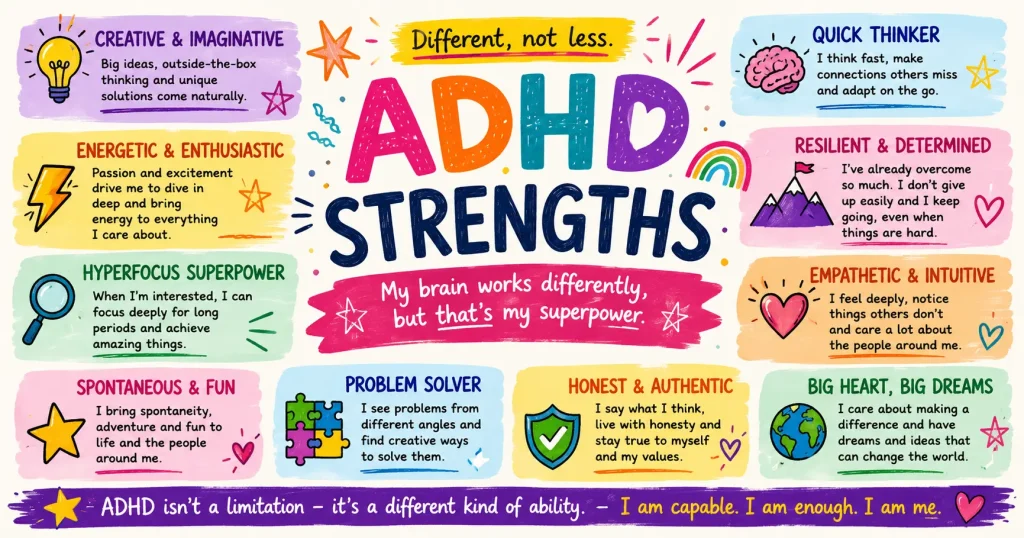
If you’re still wondering…
One thing I wish someone had told me six years ago is this:
You don’t have to become a different person after an ADHD diagnosis.
You don’t need to lose your enthusiasm.
Or your creativity.
Or your energy.
Those things aren’t the problem.
Learning how to regulate them is.
Understanding yourself isn’t about changing who you are.
It’s about giving yourself permission to stop fighting your own brain and start working with it instead.
Looking back with gratitude
To celebrate today, I bought myself a wonderfully colourful ADHD hoodie from Vinted.
A small thing perhaps.
But sometimes milestones deserve celebrating.
Because six years ago I walked into an assessment hoping for answers.
I walked out with something much bigger.
Understanding.
And from that understanding grew acceptance, confidence, ADHD Galaxy, Bedford Tutor, countless conversations with families who finally felt understood, and a career helping children realise that struggling doesn’t mean they’re broken.
If sharing my story helps just one parent recognise their child, or one adult finally feel understood, then every word has been worth writing.
Six years on…
I wouldn’t change a thing.
Here at Bedford Tutor…
Here at Bedford Tutor, I support children with ADHD, dyslexia, dyscalculia, autism and a wide range of learning differences, alongside home-educated learners across the UK and around the world. My own ADHD diagnosis has given me a deeper understanding of the challenges many families face, but it has also shown me just how powerful the right support can be. Every lesson is designed to build confidence, celebrate strengths and help children discover that they are capable of far more than they often believe.
To find out more, please click on the relevant link below.
Bel 😊