Bedford, UK


For many children, the words creative writing are enough to make them groan.
“I don’t know what to write.”
“I’m not good at stories.”
“I’ve got no ideas.”
Over the years, I’ve heard these phrases countless times from children of all ages. Whether I’m supporting home-educated learners, children with ADHD, dyslexia or autism, or students who simply lack confidence in English, reluctant writers often have one thing in common: they believe they have nothing worth writing about.
The good news is that this is very rarely true.
In fact, some of the most imaginative stories I’ve ever read have come from children who originally insisted they hated writing.
The secret isn’t forcing children to write more.
It’s helping them discover that writing can actually be fun.
Start with What Interests Your Child
One of the biggest mistakes adults sometimes make is choosing the topic for the child.
If a child has no interest in castles, why ask them to write about knights?
If they aren’t fascinated by space, why expect them to produce an exciting story about astronauts?
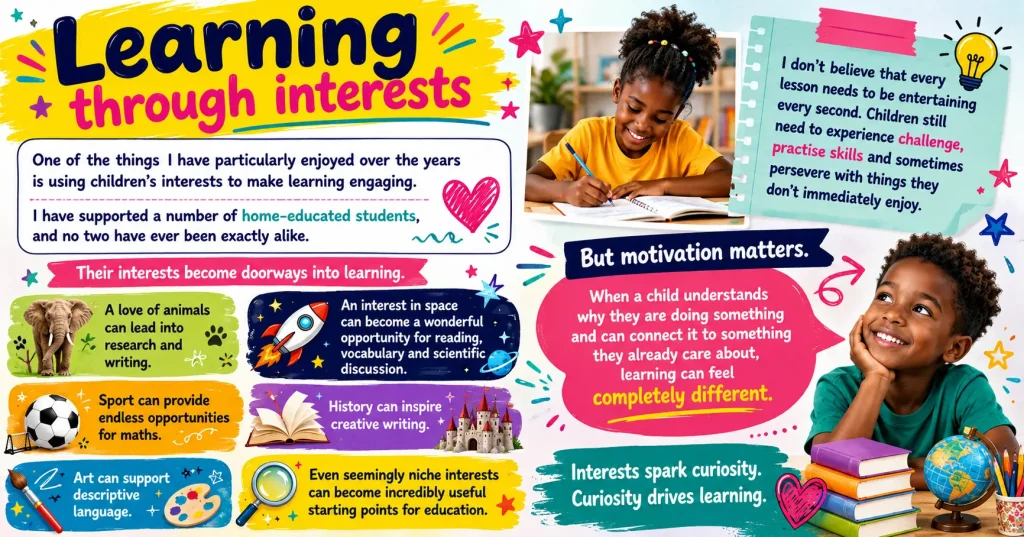
Instead, I always begin with something the child genuinely enjoys.
Over the years, I’ve seen some wonderfully creative writing inspired by children’s own interests.
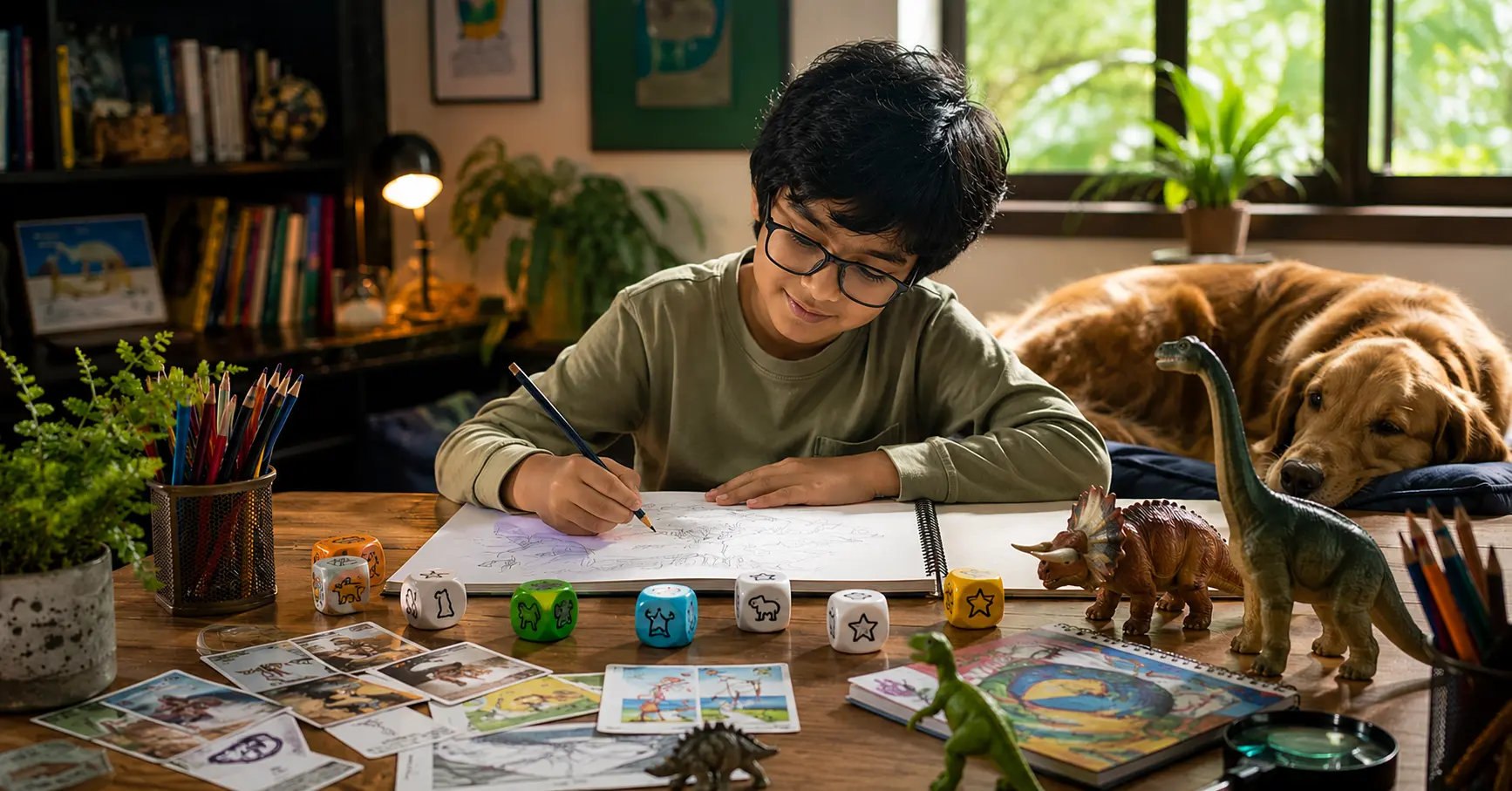
I’ve worked with children who have written incredible adventures involving dinosaurs, inventing their own prehistoric worlds complete with volcanoes and newly discovered species. Others have designed entire video games on paper, describing characters, magical powers, levels and villains in extraordinary detail.
Some of my favourite pieces of writing have been about children’s pets. Whether it’s a mischievous Labrador, a cheeky hamster or a much-loved horse, children often have endless ideas when they’re writing about something they already know and love.
When children care about the topic, they stop worrying about “doing writing” and simply start telling a story.
Turn Writing Into a Game
Creative writing doesn’t have to begin with a blank sheet of paper.
In fact, I often try to avoid that altogether.
Children are naturally imaginative when they’re playing, so why not build writing around play?
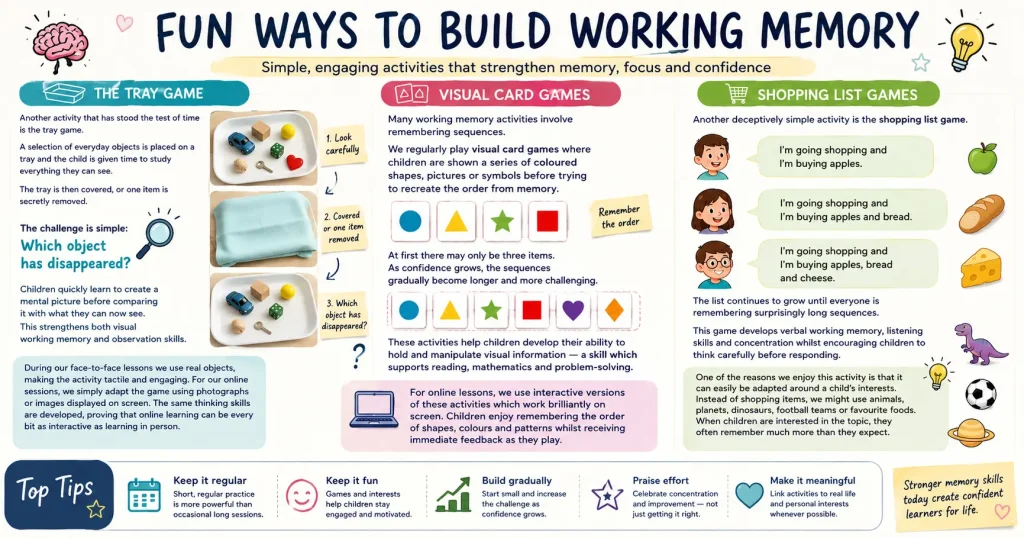
One activity I regularly recommend is using storytelling dice.
A few simple pictures rolled onto the table can become the beginning of an exciting adventure.
Perhaps the dice show a dragon, a treasure chest and a bicycle.
How did the dragon learn to ride a bike?
Why is the treasure hidden?
Who discovers it?
Suddenly, ideas begin flowing naturally.
Storytelling card games work just as well and can be adapted for children of different ages.
The wonderful thing is that you don’t need expensive resources.
Many storytelling games are available online, and it’s surprisingly easy to make your own using pieces of card, magazine pictures or even objects from around the house.
A spoon, a toy dinosaur and a pair of sunglasses might sound like a strange combination—but I’ve seen children create fantastic stories from far less!
When writing feels like a game rather than a lesson, children often become far more willing to have a go.
Draw Before You Write
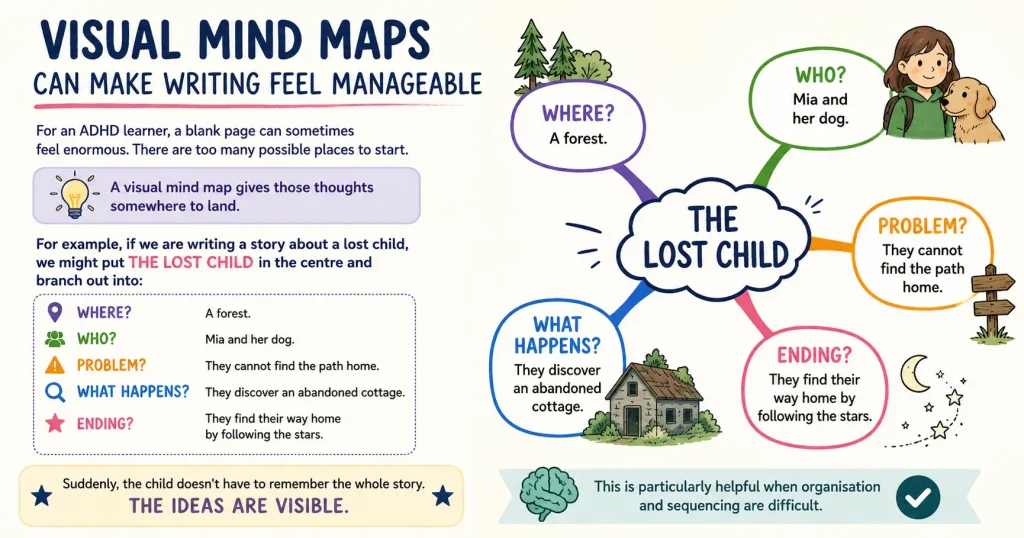
Many children find planning the hardest part of creative writing.
Traditional planning sheets filled with bullet points simply don’t work for every learner.
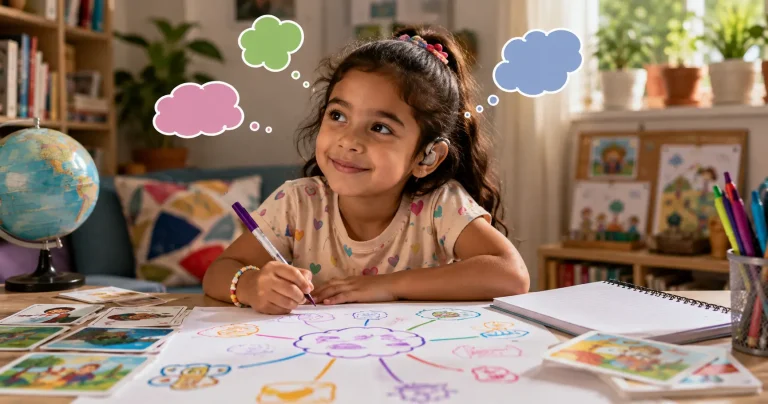
Instead, I often encourage children to draw first.
Rather than asking them to write about a dragon, I ask them to draw it.
What colour is it?
Does it breathe fire?
Where does it live?
Who are its friends?
Without realising it, children begin developing characters, settings and story ideas before they’ve written a single word.
This approach works particularly well for many neurodivergent learners, including children with ADHD and dyslexia, who often think visually.
Once the picture is complete, the writing usually feels much easier because the story already exists in their imagination.
Sometimes a single drawing can inspire several pages of writing.
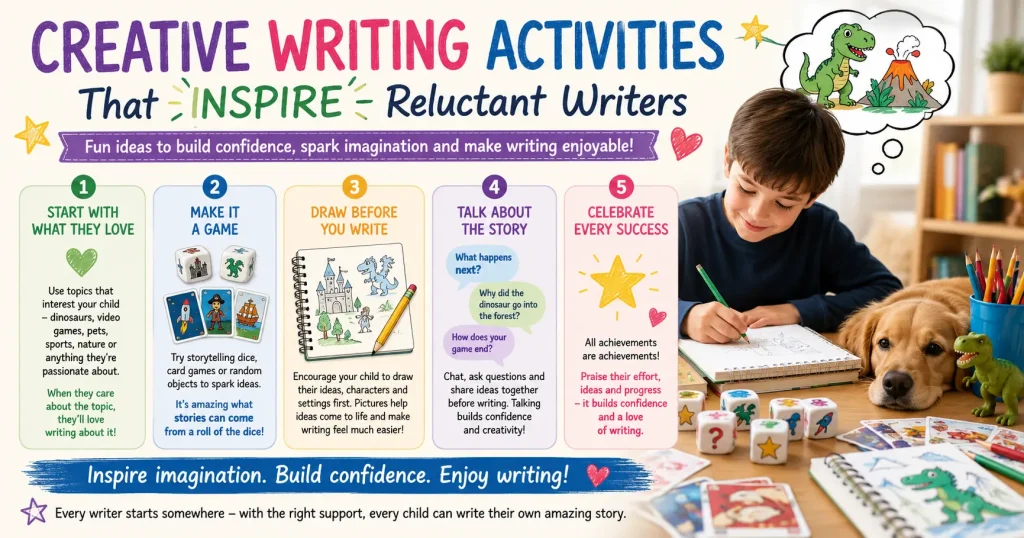
Encourage Talking Before Writing
Writing doesn’t always need to begin silently.
Some children are brilliant storytellers long before they become confident writers.
Ask them questions.
“What happens next?”
“Why did the dinosaur go into the forest?”
“How does your video game end?”
As they answer, they’re already building the structure of their story.
Sometimes I’ll even jot down their ideas as they speak before asking them to expand them in their own words.
This removes much of the pressure and allows children to focus on their creativity rather than worrying about spelling every word perfectly.
Remember That Every Writer Starts Somewhere
One of the most important things I’ve learnt over many years of tutoring is that confidence comes before great writing.
Children who believe they’re “bad at writing” often avoid it altogether.
That’s why praise matters so much.
Every achievement deserves to be recognised.
Perhaps they’ve thought of an imaginative character.
Maybe they’ve written one excellent sentence.
Perhaps they’ve remembered to use speech marks for the first time.
These are all successes.
I make a point of celebrating every step forward because every small success builds confidence for the next challenge.
I’ve watched many reluctant writers gradually begin to enjoy writing—not because they suddenly became perfect spellers or expert authors overnight, but because they started believing they could write.
Confidence grows through encouragement.
Make Creative Writing Enjoyable
Writing should never feel like a punishment.
The children who make the greatest progress are usually the ones who laugh during lessons, become excited by their ideas and forget they’re even practising English.
By choosing topics they genuinely love, turning activities into games, drawing before writing and celebrating every achievement, creative writing becomes something children look forward to rather than something they avoid.
After all, every confident writer was once a beginner.
Sometimes all a child needs is someone who believes in their ideas before they believe in them themselves.
Here at Bedford Tutor, I have supported children across the UK and around the world for many years, helping reluctant writers discover that creative writing can be enjoyable. Whether I’m working with home-educated learners, children with ADHD, dyslexia, dyscalculia or autism, I always aim to make English engaging, personalised and confidence-building. By adapting lessons to each child’s interests and learning style, I’ve seen many reluctant writers develop into enthusiastic storytellers.
To find out more, please click on the relevant link below:
Bel 😊