Bedford, UK



GL Assessments Explained: A Parent’s Guide to Understanding GL Tests
IIf your child attends an international school or is preparing to join one, you’ve probably come across the term GL Assessments. For many parents, those two words immediately raise questions.
What exactly are GL Assessments?
Why does my child’s school use them?
Should I be helping my child prepare?
Having worked with many children preparing for GL Assessments in both the UK and international schools, I’ve found that these assessments often worry parents far more than they worry children. In reality, GL Assessments are simply one way of understanding how a child is progressing and identifying where they may need additional support.
Let’s take a closer look at what they involve and how you can help your child approach them with confidence.
What Are GL Assessments?
GL Assessment is an educational organisation that develops standardised assessments used by schools across the UK and throughout the world.
Many international schools in countries such as the UAE, Saudi Arabia, Singapore, Malaysia and Thailand use GL Assessments to monitor academic progress and compare a child’s performance against age-related expectations.
Rather than testing how well a child has memorised facts the night before, GL Assessments are designed to measure the skills they have developed over time.
Schools often use the results to identify strengths, highlight areas requiring additional support and monitor progress from year to year.
What Subjects Do GL Assessments Cover?
Although each school chooses the assessments that best suit its pupils, GL Assessments commonly include:
Reading
Reading papers often assess:
- Reading comprehension
- Vocabulary knowledge
- Inference skills
- Retrieval of information
- Understanding of language
Rather than simply finding answers in a text, children are encouraged to think carefully about meaning and evidence.
English
English assessments may include:
- Grammar
- Punctuation
- Spelling
- Sentence structure
- Vocabulary
- Writing conventions
Many questions focus on understanding how language works rather than simply recalling rules.
Mathematics
Mathematics assessments usually explore:
- Number skills
- Arithmetic
- Problem solving
- Mathematical reasoning
- Fractions, decimals and percentages
- Measurement and geometry
Children are expected to apply mathematical knowledge rather than complete repetitive calculations alone.
Verbal Reasoning
Verbal reasoning assesses how children think using language.
Questions may involve:
- Word relationships
- Vocabulary
- Letter patterns
- Logical thinking
- Sequences
Strong reading habits often help children perform well in verbal reasoning.
Non-Verbal Reasoning
Non-verbal reasoning focuses on visual and spatial thinking.
Children might complete:
- Pattern recognition
- Shape sequences
- Rotations
- Analogies
- Visual problem solving
These assessments measure reasoning ability without relying heavily on language.
Why Do Schools Use GL Assessments?
Schools use GL Assessments for several reasons.
They provide a consistent way of monitoring progress while helping teachers identify both strengths and areas where additional support may be beneficial.
For international schools, they also offer valuable information when children arrive from different educational systems.
Rather than replacing teacher judgement, the assessments provide another useful piece of the puzzle.
Should Parents Be Worried?
In short, no.
One of the biggest misconceptions surrounding GL Assessments is that they are something children need to revise intensively for.
In my experience, confidence has a much greater impact than last-minute cramming.
Children who regularly read, enjoy learning and have secure foundations in English and mathematics usually approach these assessments far more confidently than children who spend hours memorising practice questions without fully understanding the underlying skills.
How Can Parents Help?
The best preparation begins long before the assessment itself.
Encourage Regular Reading
Reading widely improves vocabulary, comprehension and inference skills naturally.
Discuss stories together, ask questions about characters and encourage your child to explain their thinking.
Make Maths Part of Everyday Life
Cooking, shopping, measuring and budgeting all help develop mathematical reasoning.
Real-life maths often feels much less intimidating than worksheets.
Build Vocabulary
Children with a broad vocabulary tend to feel more confident across many different assessment areas.
Talking together, reading aloud and introducing interesting new words all make a difference.
Keep Learning Enjoyable
Some children become anxious the moment they hear the word “test.”
Whenever possible, try to frame GL Assessments as an opportunity to show what they already know rather than something to fear.
Games, puzzles and interactive learning activities are often far more effective than endless practice papers.
Supporting Neurodivergent Learners
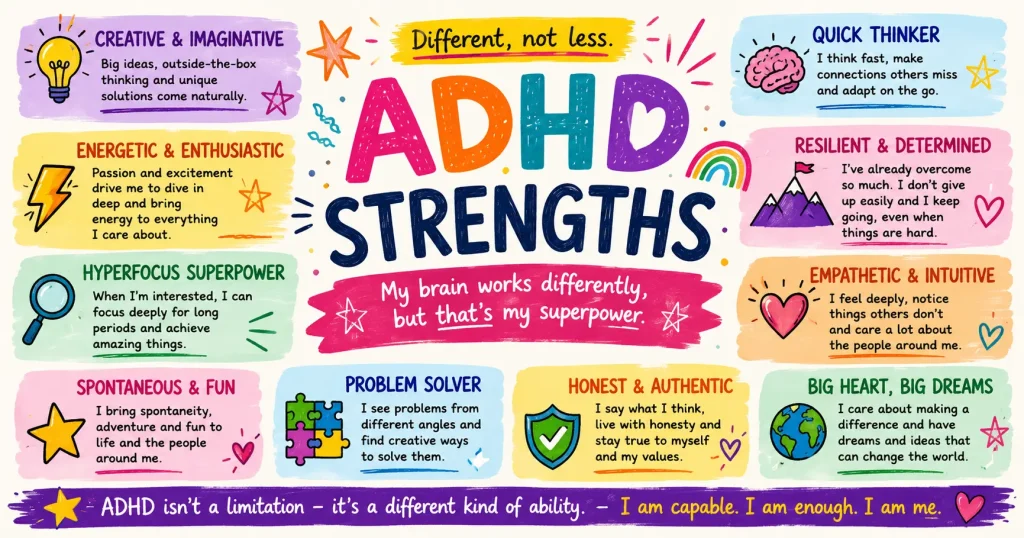
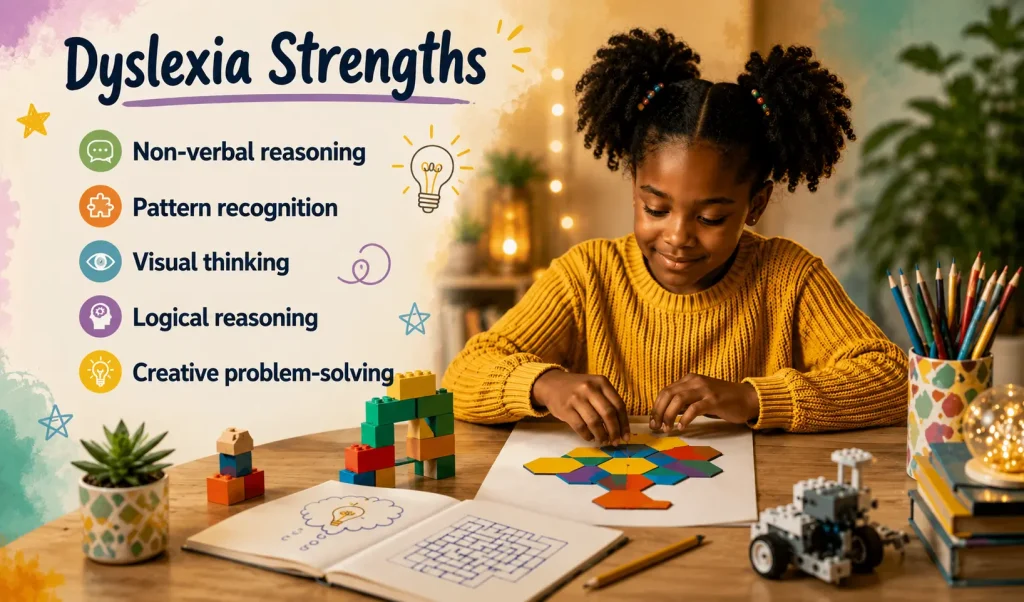
Many children with ADHD, dyslexia, dyscalculia or autism also complete GL Assessments successfully.
What often matters most is helping them access learning in ways that suit their individual strengths.
Over the years, I’ve found that many neurodivergent learners benefit from:
- Breaking learning into manageable chunks
- Building confidence gradually
- Using visual resources
- Incorporating movement into lessons
- Revisiting concepts through games and discussion
Every child learns differently, and preparation should reflect that.
Common Questions Parents Ask
Do Children Need Tutoring Before GL Assessments?
Not necessarily.
Many children simply benefit from continuing to develop their everyday English and mathematics skills.
However, if a child lacks confidence or has gaps in their understanding, personalised support can help reduce anxiety whilst strengthening the underlying skills being assessed.
Are GL Assessments Difficult?
The level of challenge depends on a child’s age and the assessment being used.
Generally, they are designed to reflect the skills children should be developing through their normal education.
Can Children Prepare?
Yes—but preparation should focus on building long-term confidence and understanding rather than memorising answers.
Regular reading, mathematical reasoning, vocabulary development and problem-solving activities all contribute to success.
Final Thoughts
GL Assessments can initially sound intimidating, but they are simply one way of measuring a child’s progress.
The strongest preparation isn’t endless revision.
It’s helping children become curious, confident learners who enjoy reading, solving problems and thinking independently.
When children feel relaxed, supported and confident in their abilities, they are far more likely to perform at their best—not just in GL Assessments, but throughout their education.
Here at Bedford Tutor
Here at Bedford Tutor, I have supported many children preparing for GL Assessments in international schools across the UK and around the world. Through personalised English, mathematics, reasoning and confidence-building lessons, I help learners develop the skills they need whilst ensuring they feel calm, capable and ready for whatever assessment comes next.
To find out more, please click on the relevant link below.
Bel 😊