ADHD in Dubai Schools: Ways Students Can Thrive

Students collaborating in a bright Dubai international school classroom with ADHD-friendly learning and supportive group activities.

Moving to Dubai can be an exciting new chapter for families. The city is home to some of the world’s leading international schools, offering British, American, IB and other internationally recognised curricula. For many children, the transition brings new friendships, opportunities and experiences.

However, for students with ADHD, starting or attending an international school can present some additional challenges. New routines, unfamiliar expectations and the fast pace of school life can all place extra demands on executive functioning skills.

The good news is that children with ADHD can absolutely thrive in international schools when they receive the right understanding and support. As someone who was diagnosed with ADHD as an adult and who has spent many years supporting neurodivergent learners both in the UK and overseas, I’ve seen first-hand just how transformative the right environment can be.

ADHD Looks Different in Every Child

One of the biggest misconceptions surrounding ADHD is that every child experiences it in the same way.

Some children are highly energetic and impulsive, whilst others appear quiet, thoughtful and easily distracted. Some excel academically but struggle with organisation, whilst others find traditional classroom learning difficult from an early age.

My own experience taught me this lesson. I loved learning, achieved well at school and was often described as organised, yet I also experienced distractibility, impulsivity and difficulties with attention that weren’t recognised until adulthood. ADHD is incredibly diverse, and understanding that diversity is often the first step towards effective support.

Rather than asking, “Does this child look like someone with ADHD?” it is far more helpful to ask, “How does this particular child’s brain work best?”

Why International Schools Can Be Both Wonderful and Challenging

Dubai’s international schools are incredibly diverse. Children often learn alongside classmates from dozens of different nationalities, creating rich cultural experiences that many ADHD learners genuinely enjoy.

At the same time, international education often involves:

  • High academic expectations.
  • Frequent assessments.
  • Busy timetables.
  • Large social environments.
  • Transitions between different curricula.

Executive functioning skills such as organisation, working memory, planning and time management are essential for navigating these demands. These are precisely the areas where many ADHD learners need additional support.

When schools recognise these differences and adapt accordingly, children often flourish.

Creating Predictable Routines

Children with ADHD generally cope far better when they know what to expect.

Predictable classroom routines reduce uncertainty and free up mental energy for learning. Visual timetables, written instructions and clear expectations can make an enormous difference.

Many international schools in Dubai already make excellent use of technology. Homework platforms, digital calendars and online learning systems can all become valuable organisational tools when used consistently.

Consistency between school and home also helps children feel secure.

Supporting Executive Function Skills

Executive functioning is often described as the brain’s management system.

Students with ADHD may know exactly what they need to do but struggle to begin, remember instructions or organise materials efficiently.

Practical strategies include:

  • Breaking larger tasks into manageable sections.
  • Providing checklists.
  • Using colour coding for subjects.
  • Allowing extra planning time.
  • Teaching organisation explicitly rather than assuming children naturally acquire these skills.

These strategies benefit many learners, not just those with ADHD.

Movement Helps Learning

One of the greatest myths surrounding education is that good learning always happens whilst sitting perfectly still.

Many ADHD learners actually concentrate better when movement is incorporated into their day.

Simple adjustments might include:

  • Standing while completing part of a task.
  • Short movement breaks.
  • Stretching between activities.
  • Using discreet fidget tools where appropriate.
  • Interactive learning activities.

Looking back, many of my happiest learning experiences involved active participation rather than simply listening. For many children, movement supports attention rather than distracting from it.

Confidence Is Just as Important as Academic Support

Perhaps the greatest danger facing many ADHD learners isn’t the ADHD itself.

It’s losing confidence.

Children who regularly forget homework, misplace equipment or struggle to complete tasks may begin believing they’re lazy or incapable.

Nothing could be further from the truth.

Many ADHD learners are incredibly creative, curious and imaginative. They often ask insightful questions, think laterally and approach problems from fresh perspectives.

The role of parents and teachers is to ensure these strengths are recognised alongside the challenges.

A child who believes in themselves is far more likely to persevere through difficult moments.

Working Together Makes the Difference

The strongest outcomes happen when parents, teachers and tutors communicate openly.

This is particularly valuable in international schools where families may also be adapting to life in a new country.

Regular conversations about:

  • What is working well.
  • Current challenges.
  • Helpful classroom strategies.
  • Emotional wellbeing.
  • Academic progress.

allow everyone to support the child consistently.

When children receive the same messages of encouragement both at home and at school, their confidence often grows remarkably quickly.

Online Tuition Can Complement International School Learning

Many families in Dubai choose online tuition to reinforce learning without adding unnecessary pressure.

One-to-one lessons provide opportunities to revisit concepts, strengthen executive functioning skills and build confidence in a calm environment.

Because lessons are personalised, they can adapt to the individual learner rather than expecting the learner to adapt to a rigid teaching style.

This flexibility is particularly valuable for ADHD learners, who often benefit from engaging, interactive lessons that match their interests and learning preferences.

Final Thoughts

Children with ADHD don’t need to become different learners.

They need learning environments that recognise how their brains naturally work.

International schools in Dubai already offer exceptional educational opportunities. When these are combined with understanding, flexible teaching and strong communication between home and school, ADHD learners can achieve remarkable things.

Most importantly, children need to know that ADHD is not a limitation on their potential. Every learner’s strengths and challenges are unique, and with the right support they can develop the confidence, resilience and skills to flourish both academically and personally.


Wondering How We Can Help?

Whether you’re exploring tuition options, looking for specialist support or simply have a question, we’d love to hear from you. Tell us a little about your child and what you’re looking for, and we’ll be in touch as soon as possible.


Current Availability

Super Summer Learning (August): Good availability throughout the holiday

Weekday daytime tuition (from September): Good availability for international students, home-educated learners and families with flexible schedules

🗓️ After-school, Saturday & Sunday morning tuition (from September): Waiting list currently in operation


Please include Area Code if Outside UK

Related Posts

Related Blog Posts

  • Why Summer Learning Matters More Than You Think

    When the summer holidays arrive, I think every family breathes a little sigh of relief.

    The school run disappears, alarm clocks get ignored (at least for a while!), and life feels a little less rushed. Summer is made for making memories, exploring, relaxing and spending quality time together.

    But it often comes with one big question from parents…

    Should my child be doing any learning over the summer?

    My answer is always the same.

    Yes—but not in the way you might think.

    I’m certainly not suggesting children should spend hours completing worksheets or sitting at a desk while everyone else is enjoying the sunshine. Childhood is precious, and the summer holidays should absolutely be filled with adventures, family time and plenty of fun.

    However, keeping little minds active during those six weeks can make a huge difference, and that’s exactly why we’ve created our Super Summer Learning.

    What Is the Summer Slide?

    You may have heard people talk about the “summer slide.”

    It’s the term used to describe the learning loss that can happen when children spend several weeks without practising the skills they’ve worked so hard to develop throughout the school year.

    Now, this doesn’t mean children forget everything they’ve learned overnight. They won’t suddenly forget how to read or complete maths problems.

    But confidence can dip.

    Fluency can slow down.

    Simple skills that once came naturally sometimes need refreshing.

    As someone who works with children every day, I’ve seen it happen time and time again. September often starts with children spending the first few weeks remembering rather than moving forward.

    A little summer learning each week can help prevent that.

    It’s About Confidence, Not Pressure

    One thing I always want parents to remember is that summer learning should never feel like school at home.

    Children have worked incredibly hard all year. They deserve a break.

    The goal isn’t to overload them with work.

    The goal is simply to keep their brains engaged.

    Sometimes just ten or fifteen minutes each day is enough.

    Reading a book together.

    Playing a maths game.

    Writing a postcard from holiday.

    Helping measure ingredients while baking.

    Spotting patterns on a walk.

    Even conversations about the world around them are learning.

    Children don’t always need to sit down with a pencil to develop important skills.

    Learning happens everywhere.

    Small and Consistent Always Wins

    One of the biggest mistakes people make is believing learning has to happen in big chunks.

    It really doesn’t.

    Children learn best through regular, repeated experiences.

    A short activity every day is often far more beneficial than trying to complete hours of work once a week.

    Those little moments soon add up.

    Five pages of a book.

    A quick spelling challenge.

    Ten minutes of number games.

    A family quiz after dinner.

    Before you know it, your child has continued practising key skills all summer without it ever feeling overwhelming.

    Consistency is far more powerful than perfection.

    Learning Looks Different for Every Child

    One of the things I love most about summer is how naturally learning can fit into everyday life.

    You’re already doing so much without even realising it.

    Heading to the beach? Talk about tides, sea creatures and habitats.

    Going shopping? Let your child work out the total or calculate the change.

    Baking together? There’s maths in every recipe.

    Travelling somewhere new? Read maps, spot road signs and learn about local history.

    Planting flowers? Discuss how plants grow and what they need to survive.

    Playing board games? You’re developing turn-taking, strategy, communication and problem-solving.

    Watching the stars? You’re exploring science.

    Every family holiday is full of learning opportunities—you just don’t always notice them.

    Supporting Neurodivergent Learners During the Summer

    For many children with ADHD, dyslexia, dyscalculia or autism, the summer holidays can be both wonderful and challenging.

    The freedom from school routines is often a welcome break, but returning in September can sometimes feel overwhelming if key skills haven’t been used for several weeks.

    That’s why gentle, enjoyable activities can be so valuable.

    There’s no need to recreate the classroom.

    Instead, focus on keeping routines relaxed, celebrating small successes and following your child’s interests. Reading together, playing educational games, cooking, building, creating and exploring outdoors all help maintain important skills whilst protecting confidence.

    Every child learns differently, and that’s something worth celebrating.

    Reading Is Still One of the Best Things You Can Do

    If I could recommend just one activity over the summer, it would always be reading.

    Reading supports almost every area of learning.

    It builds vocabulary.

    Improves comprehension.

    Develops imagination.

    Strengthens writing.

    Even ten minutes before bed each evening can have a huge impact.

    And remember, reading doesn’t only mean chapter books.

    Comic books, magazines, recipe books, football programmes, information books and graphic novels all count.

    The goal is simply to help children discover that reading is enjoyable.

    Summer Learning Around the World

    Many of the families I support live overseas, particularly in the UAE, Saudi Arabia, Singapore, Malaysia and Thailand.

    Whilst school holidays vary from country to country, the principle remains exactly the same.

    A little regular learning helps children maintain confidence and feel prepared for the next stage of their education, whether they follow the British Curriculum, American Curriculum, IB Programme or another international curriculum.

    Online summer tuition can also provide valuable structure for children who enjoy routine or need a little extra support before the new school year begins.

    Why We Created Super Summer Learning

    I know how busy family life becomes during the holidays.

    Parents don’t want to spend hours searching Pinterest or creating activities from scratch.

    That’s why we’ve done the hard work for you.

    Our Super Summer Learning has been designed to make learning simple, enjoyable and achievable.

    The activities are engaging, varied and designed to fit around family life rather than take it over.

    Whether your child enjoys reading, needs a little extra confidence in maths, is home educated or simply benefits from short daily challenges, there’s something for everyone.

    There are opportunities to practise key skills whilst still leaving plenty of time for ice creams, park trips, holidays, sleepovers and lazy afternoons.

    Because that’s exactly what summer should be about.

    It’s not about creating another timetable.

    It’s about making learning part of everyday life in a way that children genuinely enjoy.

    Every Child Benefits Differently

    Something I always remind parents is that every child is different.

    Some children absolutely love learning and will happily complete activity after activity.

    Others need much shorter bursts and far more encouragement.

    Both are completely normal.

    The important thing isn’t how much they complete.

    It’s that they continue believing they can learn.

    Confidence is one of the greatest gifts we can give children.

    When children return to school feeling capable, positive and ready to learn, everything else becomes easier.

    Making September Feel Less Daunting

    Starting a new school year can feel exciting, but it can also bring nerves.

    New teachers.

    New classrooms.

    New expectations.

    By keeping learning ticking over during the summer, children often return feeling more prepared and more confident.

    Instead of spending weeks trying to remember forgotten skills, they’re ready to build on what they already know.

    That confidence makes a real difference.

    Let’s Make This Summer Count

    Summer isn’t about creating perfect routines or expecting children to spend hours working.

    It’s about balance.

    It’s about making memories whilst keeping curiosity alive.

    It’s about laughing over board games, reading stories under a blanket in the garden, baking together, exploring new places and finding learning in everyday moments.

    That’s exactly what our Super Summer Learning has been designed to do.

    Whether your child needs support with English, maths, confidence building, home education or simply wants to keep their skills fresh over the holidays, we’ve created activities that fit naturally into family life without taking over the summer.

    We want children to head into September feeling proud of themselves, excited for what’s next and confident in everything they’ve achieved.

    So wherever this summer takes you—whether you’re travelling abroad, enjoying days out, home educating, or simply making the most of time together—remember that every conversation, every story, every game and every new experience is helping your child grow.

    Learning doesn’t stop when school finishes.

    Sometimes, the best learning happens when children don’t even realise they’re doing it.


    Related Posts

  • One Thing Parents Should Look For In An Online Tutor

    When parents contact me looking for an online tutor, they often ask about qualifications, experience and academic results.

    Those things are important, of course.

    However, if I could recommend just one thing that parents should look for, it would be flexibility.

    Not flexibility in the sense of cancelling lessons at the last minute or constantly changing plans. I mean the ability to adapt to a child’s individual circumstances, learning style and educational journey.

    Over the years, I’ve worked with children from many different countries and educational backgrounds. Although every student has been unique, one thing has become very clear: children learn best when the adults supporting them are willing to adapt.

    One of the greatest advantages of online tuition is that geography doesn’t really matter. From my little corner of Bedfordshire, I’ve been fortunate enough to work with children in Saudi Arabia, the UAE, Thailand and many other parts of the world. Whilst mathematics may still be mathematics and English may still be English, every child’s educational experience is slightly different.

    One area where flexibility has been particularly important is school holidays.

    When I first began working with international students, I quickly realised that not everyone follows the same academic calendar. Whilst children in the UK might be enjoying their summer holidays, some of my students overseas are preparing to return to school. Equally, there have been times when UK schools have been in full swing whilst students in Saudi Arabia or the UAE have been enjoying a well-earned break.

    Rather than seeing this as a challenge, I’ve always viewed it as an opportunity.

    The quieter periods often allow us to focus on confidence-building, revisit areas of learning that need strengthening or simply learn at a pace that isn’t always possible during a busy school term. Some of my most productive lessons have taken place when a child has been on holiday and finally had the mental space to breathe, reflect and enjoy learning again.

    Flexibility is equally important when it comes to different curricula.

    Not every child follows the British Curriculum. Over the years, I’ve supported students studying within British international schools, American curricula and a variety of international programmes. I’ve worked with children in Saudi Arabia preparing for assessments that look quite different from those taken by students in Bedford. I’ve taught learners in the UAE whose schools approach mathematics in a slightly different way. I’ve also worked with students in Thailand whose educational experiences have been shaped by an entirely different cultural and academic environment.

    At first glance, these differences might seem significant.

    In reality, good teaching is often about identifying the skills which sit beneath the curriculum. Whether a child is learning persuasive writing in Dubai, developing reading comprehension skills in Riyadh or strengthening mathematical reasoning in Bangkok, the core goal remains the same: helping them become confident, capable learners.

    This is where flexibility becomes so valuable.

    A tutor who rigidly follows one method or one curriculum may struggle when working with international learners. A flexible tutor, however, can adapt resources, explanations and teaching approaches to suit the child sitting in front of them.

    As someone with ADHD, I think this is one of the reasons I value flexibility so highly. My own brain has never enjoyed being squeezed into neat little boxes. Looking back, the teachers who helped me most were rarely the ones who insisted there was only one way to do something. They were the people who recognised that different minds often need different routes to reach the same destination.

    The same principle applies to tutoring.

    Qualifications matter. Experience matters. Subject knowledge matters.

    But if I were choosing an online tutor for a child, I would look for someone who is willing to adapt, willing to listen and willing to see the individual behind the curriculum.

    Because when a tutor is flexible enough to meet a child where they are, learning often becomes far more successful than anyone imagined possible.

    ​​If you’re considering online tuition, our worldwide lessons offer one-to-one support for children aged 5 to 16 in an engaging, inspiring and encouraging learning environment. Each lesson is tailored to your child’s needs, helping them develop confidence, build key skills, and achieve their potential from the comfort of your home. 

    ​To find out more, please click on the link below:

    Bel 😊


    Related Posts

  • British Curriculum vs American Curriculum: What Parents Living Abroad Should Know


    One of the questions I am frequently asked by parents living overseas is whether there is a significant difference between the British and American curricula.

    The short answer is yes… and no!

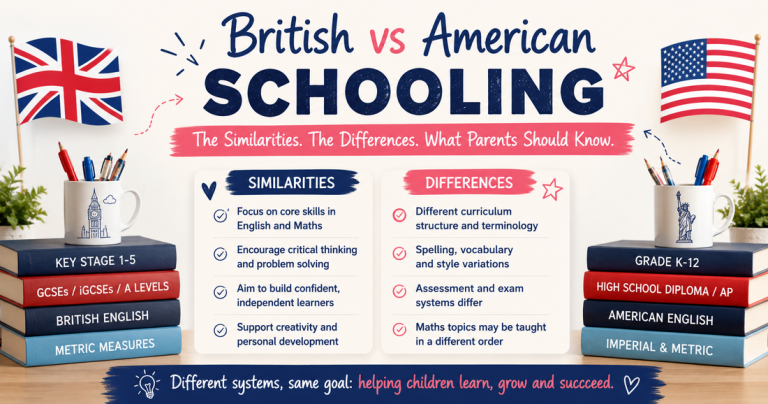
    Having taught children following both educational systems for many years in countries such as the UAE and Thailand, I am often surprised by how similar they really are. Whilst there are certainly some differences in terminology, assessment and curriculum content, both ultimately aim to help children develop the same core skills: confidence in reading, competence in writing and a secure understanding of mathematics. That being said, there are some important distinctions which can occasionally catch families by surprise, particularly when children move between schools or educational systems.​

    One of the most obvious differences appears in English.

    Although British English and American English are essentially the same language, there are some spelling variations which can occasionally cause confusion. For example, a child attending a British school may write colour, favourite and centre, whilst a child following the American curriculum will be expected to write color, favorite and center.

    I often teach both British and American English and one of the first things I reassure children about is that neither version is “wrong”. The important thing is consistency. If a child is studying within an American school, they should use American spellings. If they are following the British curriculum, British spellings are usually expected.

    Fortunately, children tend to adapt remarkably quickly once they understand the differences.

    Over the years, I have also gained extensive experience preparing students for the GL Assessments used by many international schools. These assessments often form an important part of school entry procedures and provide valuable information about a child’s strengths and areas for development. Supporting children through these assessments has given me a strong understanding of the skills many international schools expect students to demonstrate.

    Alongside this, I regularly support students studying iGCSE English Language. I particularly enjoy helping learners develop their reading, writing and analytical skills whilst building the confidence needed to tackle longer pieces of writing and examination questions.

    My experience is not limited to the British curriculum, however.

    I have also worked with students in countries such as Saudi Arabia who follow Common Core English and Mathematics programmes, and regularly support children studying both the British and American curricula. Over the years, working across different educational systems has taught me that successful teaching is rarely about the curriculum itself. More often, it is about understanding the child sitting in front of you and adapting your approach to suit the way they learn best.​

    Mathematics is perhaps where some of the most noticeable differences occur.

    When I first began supporting a student studying the American mathematics curriculum over a longer period of time, I quickly realised that certain concepts were approached differently. The methods were not necessarily better or worse, but they were sometimes presented in a different order or explained using different terminology.

    One area which particularly expanded my own knowledge was the use of imperial measurements.

    Whilst British children are often familiar with miles and occasionally encounter other imperial units, the American curriculum tends to make much greater use of feet, inches, yards, pounds and gallons. Supporting students with these concepts helped me become far more confident teaching measurement systems which are not always covered in depth within the British curriculum.

    Experiences like these have been invaluable because they have allowed me to become more adaptable as a tutor.

    Perhaps the biggest lesson I have learnt is that children are often far more flexible than adults give them credit for. Whether they are learning colour or color, converting centimetres or inches, preparing for GL Assessments or studying iGCSE English Language, the underlying goal remains exactly the same: helping them become confident, capable learners.

    Curricula may vary from country to country, but curiosity, confidence and a love of learning are universal.

    As someone who works with children from a wide range of countries and educational backgrounds, I genuinely enjoy helping students navigate these differences and discover that, regardless of which curriculum they follow, they are capable of achieving great things.

    Here at Bedford Tutor, I have supported children following both the British and American curricula for many years. From GL Assessments and iGCSE English Language to Common Core English and Mathematics, working with learners from different educational systems has helped me develop a flexible approach that allows every child to build confidence whilst developing the skills they need to succeed.

    To find out more, please click on the link below:

    Bel 😊


    Related Posts

  • Six Years Since My ADHD Diagnosis: The Day Everything Finally Made Sense

    It’s strange really, because in some ways it feels like yesterday, and in other ways it feels as though I’ve lived an entirely different lifetime since that appointment.

    The date has always carried extra meaning for me because it’s also my late grandmother’s birthday. She was one of those people who believed in me long before I fully believed in myself. I’d like to think she’d be proud—not because I have ADHD, of course, but because of what I’ve chosen to do with the understanding that diagnosis gave me.

    Looking back now, I don’t really see my diagnosis as the beginning of my ADHD journey.

    It was the beginning of my self-understanding.


    For 31 years, I thought I was the problem

    Before my diagnosis, I spent decades trying to work out why some things seemed so effortless for other people but felt exhausting for me.

    Why could I happily spend twelve hours hyperfocused on something I loved, yet struggle to answer an email?

    Why did my brain collect ideas like a magpie collecting shiny objects?

    Why did people describe me as enthusiastic, energetic and creative, yet also tell me I needed to slow down, listen more carefully and stop rushing?

    The answers had actually been following me around since childhood.

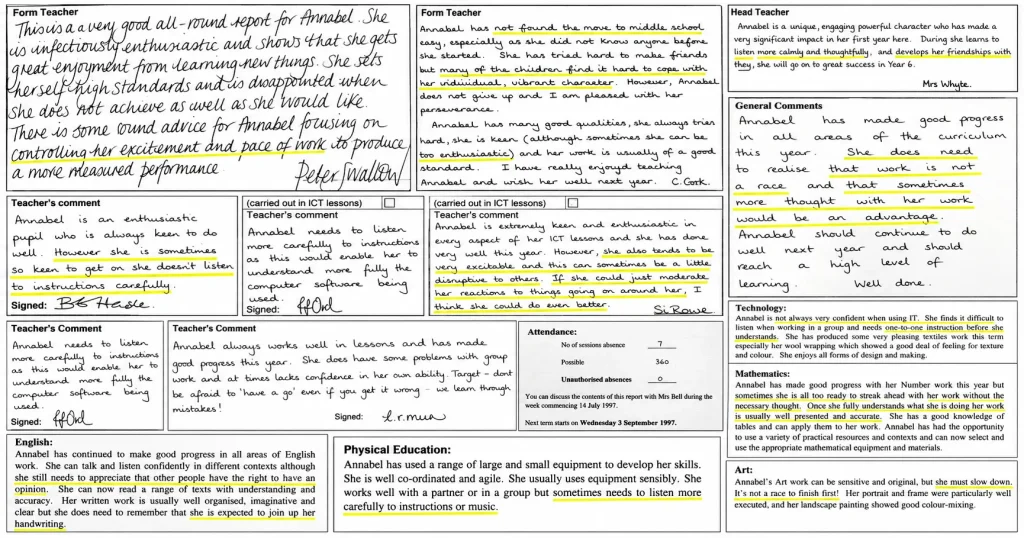
    When I requested my old school reports before my assessment, I expected to find the occasional comment.

    Instead, I found pages and pages of teachers describing the same child.

    “Infectiously enthusiastic.”

    “Needs to listen more carefully.”

    “Too keen to get on.”

    “Must slow down.”

    “Controlling her excitement.”

    “Work is not a race.”

    Reading those reports as a 31-year-old was emotional.

    Not because they criticised me.

    Because they saw me.

    Long before ADHD was even mentioned, they were describing exactly the same traits that would eventually contribute to my diagnosis.

    When my psychiatrist assessed me in July 2020, it wasn’t based on one conversation. It drew together my childhood reports, detailed questionnaires, information from my mum and my own lifelong experiences before confirming Combined ADHD.

    Suddenly, thirty-one years of confusion began to make sense.

    A collage of historical school report comments from primary and middle school, featuring handwritten teacher feedback across multiple subjects including English, Mathematics, Art, Technology, ICT, Physical Education, and general comments. Many passages are highlighted, revealing recurring themes such as enthusiasm for learning, creativity, listening more carefully to instructions, slowing down, thinking work through, and building confidence. The reports document the student's academic progress, strengths, and personal development over several school years.

    My diagnosis didn’t change who I was

    People sometimes imagine receiving an ADHD diagnosis changes everything overnight.

    It doesn’t.

    I didn’t wake up the next morning with a different brain.

    I was still the same person who became fascinated by new ideas.

    The same person who interrupted because my excitement arrived before my patience.

    The same person who could lose an afternoon researching one tiny question I’d accidentally asked myself.

    The diagnosis didn’t change me.

    It changed the way I understood myself.

    Instead of asking,

    “What’s wrong with me?”

    I started asking,

    “What works for me?”

    That tiny shift changed everything.


    The biggest surprise wasn’t the diagnosis…

    …it was realising how hard I’d been working just to appear “normal.”

    Like many women with ADHD, I’d developed coping strategies without even realising it.

    Systems.

    Lists.

    Routines.

    Calendars.

    Colour coding.

    Structure.

    From the outside, people often assumed I couldn’t possibly have ADHD because I ran a business, arrived on time and appeared organised.

    What they couldn’t see was the amount of energy it took to hold all those systems together.

    Looking back, I wasn’t organised because ADHD hadn’t affected me.

    I was organised because I had spent years building scaffolding around the parts of my brain that found organisation difficult.


    ADHD has shaped my work in ways I never expected

    One of the biggest gifts my diagnosis gave me was understanding why I connected so naturally with so many of the children I teach.

    Long before I knew I had ADHD myself, I was already drawn towards children who learned differently.

    The child who couldn’t sit still.

    The child who had brilliant ideas but couldn’t get them onto paper.

    The child who had been told they talked too much.

    The child whose confidence had quietly disappeared because school had become a place where they constantly felt they were getting things wrong.

    Now I understand why.

    I recognise so much of myself in them.

    Not every child with ADHD is the same—I often say, “My ADHD isn’t your ADHD.” We all experience it differently. But understanding my own brain has made me a better tutor, a better listener and, I hope, someone who helps children feel understood rather than judged.


    Six years later…

    People sometimes ask whether I still think about my diagnosis.

    The answer is yes.

    Not because I question it anymore.

    Quite the opposite.

    Every so often, I’ll stumble across another childhood memory, another school report or another family story and think,

    “Well… that makes sense now.”

    It’s almost amusing how many clues there were.

    The child who was constantly told to slow down.

    The teenager whose enthusiasm was often bigger than the room.

    The adult who built a business around curiosity, creativity and helping other people.

    The signs were there all along.

    I just didn’t know what I was looking at.

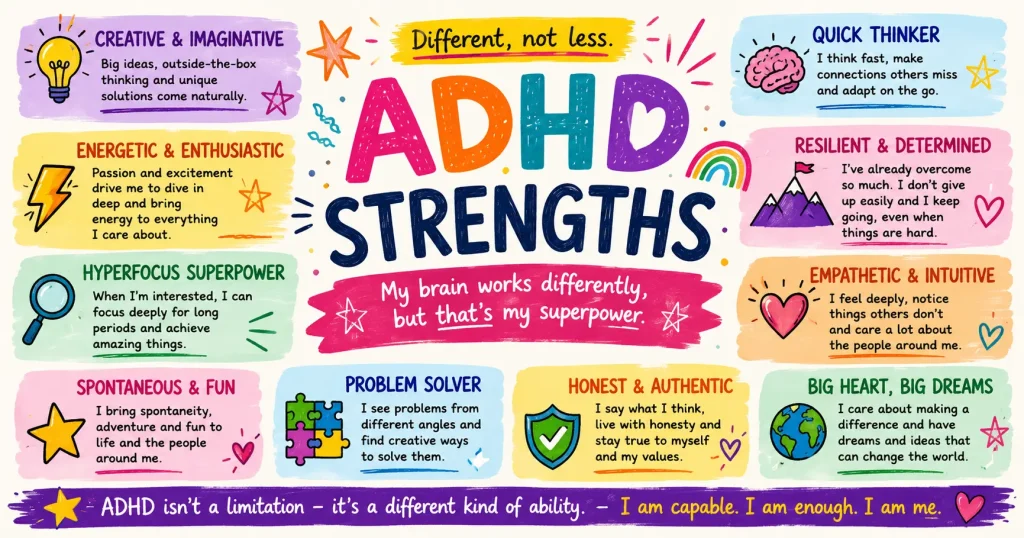
    A colourful infographic celebrating ADHD strengths with the bold title "ADHD Strengths" and the message "Different, not less." The poster highlights positive qualities including creativity and imagination, quick thinking, energy and enthusiasm, resilience, hyperfocus, empathy, spontaneity, problem solving, honesty, and having big dreams. Bright illustrations of a lightbulb, brain, rainbow, mountains, heart, globe, puzzle pieces, shield, magnifying glass, and stars accompany each section. A banner at the bottom reads, "ADHD isn't a limitation, it's a different kind of ability. I am capable. I am enough. I am me."

    If you’re still wondering…

    One thing I wish someone had told me six years ago is this:

    You don’t have to become a different person after an ADHD diagnosis.

    You don’t need to lose your enthusiasm.

    Or your creativity.

    Or your energy.

    Those things aren’t the problem.

    Learning how to regulate them is.

    Understanding yourself isn’t about changing who you are.

    It’s about giving yourself permission to stop fighting your own brain and start working with it instead.


    Looking back with gratitude

    To celebrate today, I bought myself a wonderfully colourful ADHD hoodie from Vinted.

    A small thing perhaps.

    But sometimes milestones deserve celebrating.

    Because six years ago I walked into an assessment hoping for answers.

    I walked out with something much bigger.

    Understanding.

    And from that understanding grew acceptance, confidence, ADHD Galaxy, Bedford Tutor, countless conversations with families who finally felt understood, and a career helping children realise that struggling doesn’t mean they’re broken.

    If sharing my story helps just one parent recognise their child, or one adult finally feel understood, then every word has been worth writing.

    Six years on…

    I wouldn’t change a thing.


    Wondering How We Can Help?

    Whether you’re exploring tuition options, looking for specialist support or simply have a question, we’d love to hear from you. Tell us a little about your child and what you’re looking for, and we’ll be in touch as soon as possible.


    Current Availability

    Super Summer Learning (August): Good availability throughout the holiday

    Weekday daytime tuition (from September): Good availability for international students, home-educated learners and families with flexible schedules

    🗓️ After-school, Saturday & Sunday morning tuition (from September): Waiting list currently in operation


    Please include Area Code if Outside UK

    Related Posts

  • Reading Fluency for Dyslexic Children: Helpful Tips

    For some children with dyslexia, reading can feel like hard work.

    A page of words which looks perfectly ordinary to an adult can feel like a maze to a child who is still working out sounds, recognising familiar words and remembering what they have just read. When reading requires so much concentration, it is understandable that some children begin to avoid it altogether.

    This is why I believe building reading fluency should be about much more than simply asking a child to read more books.

    It is about helping them become familiar with words, developing confidence, creating opportunities for successful literacy and, perhaps most importantly, helping them discover that books and stories can actually be enjoyable.

    Over the years, I have supported many children with dyslexia and have found that small, everyday opportunities to practise literacy can make a surprisingly big difference.

    What is reading fluency?

    Reading fluency is the ability to read words accurately, smoothly and with increasing confidence.

    For a child with dyslexia, this can take time. They may need to work much harder than their peers to recognise words automatically, decode unfamiliar vocabulary or remember common spelling patterns.

    This does not mean they lack intelligence or understanding.

    In fact, many dyslexic learners are bright, creative and incredibly capable. The difficulty is often that the mechanics of reading can require so much mental energy that there is less capacity left for enjoying the story or thinking about what the words mean.

    This is why developing fluency gradually can be so valuable.

    Reading does not only happen with a book

    One of the things I encourage parents to remember is that literacy practice does not have to mean sitting at a table with a reading book every evening.

    There are opportunities to read everywhere.

    Think about a car journey.

    There are road signs, shop names, directions, number plates and signs on buildings. A child might spot a word they recognise and read it aloud. Perhaps they can read “STOP” on a road sign, “Tesco” outside the supermarket or a place name they have seen before.

    These little moments count.

    They allow children to practise recognising words in a natural environment without the pressure of completing a formal literacy exercise.

    Sometimes I will deliberately point out a sign and ask, “Can you read that one?” Other times, I might let the child notice it themselves.

    It is amazing how much more enjoyable literacy can become when it has a purpose.

    Short reading activities can be incredibly effective

    When a child finds reading difficult, long sessions can quickly become exhausting.

    This is particularly important to remember with dyslexic learners.

    Rather than expecting a child to read for a long period of time, I often prefer short, manageable activities. A few minutes of focused practice can be much more productive than pushing a child until they are tired and frustrated.

    Flash cards can be useful here.

    We might practise a small number of familiar words, revisit words we have encountered before or look at particular spelling patterns. The aim is not to overwhelm the child with a huge pile of cards.

    Instead, we want them to experience success.

    Perhaps they read eight words correctly today.

    Tomorrow, we might revisit those same words before introducing one or two new ones.

    Over time, words which once required considerable thought can become familiar. That growing automaticity can make literacy feel less tiring.

    Choose books because the child loves them

    One of the most important things we can do is choose books that children actually want to read.

    If a child loves dinosaurs, let them read about dinosaurs.

    If they are fascinated by football, find a football book.

    If they adore funny stories, look for something that makes them laugh.

    If they love animals, choose animal stories or fact books.

    The subject matter matters because motivation matters.

    However, there is another important consideration: the book needs to be suitable for the child’s age and reading ability.

    A child may be ten years old but have a reading age which means that some ten-year-old novels are currently too difficult. There is absolutely nothing wrong with finding a book which is easier to read while still being interesting and age-appropriate.

    We want children to feel successful, not embarrassed by the level of the book they are using.

    A book being easier does not make the experience less valuable.

    Let children read the words they can

    When I am reading with a child, I don’t want to take every word away from them.

    If they can read a word, I let them read it.

    That sounds obvious, but it is an important part of building independence.

    If a child sees a familiar word and recognises it, that is a success. We want them to notice those moments and realise, “I know this word!”

    If they come across a word they cannot read, however, they do not need to sit staring at it indefinitely.

    This is where adult support becomes incredibly valuable.

    Guided reading: supporting without taking over

    Guided reading is one of the approaches I particularly like because it gives children the opportunity to work through text independently whilst knowing that an adult is there to help.

    The child reads the words they can.

    When they reach a word they cannot decode, the adult provides an appropriate prompt or helps them work through it.

    Sometimes we might look at the sounds within the word. Sometimes we might break a longer word into syllables. Sometimes the adult simply supplies the word so that the child can continue with the sentence and maintain the meaning of the story.

    The important thing is that the child is not left struggling for so long that reading becomes miserable.

    Nor do we want an adult reading the entire book for them.

    It is a partnership.

    The child reads what they can. The adult supports what they cannot.

    That creates a lovely balance between independence and reassurance.

    Don’t forget to talk about the story

    Reading fluency is not simply about saying words quickly.

    Reading is about understanding, imagining, questioning and connecting with what is on the page.

    After a short section, we might stop and ask:

    “What do you think is going to happen?”

    “Why do you think the character did that?”

    “Which bit was your favourite?”

    “Can you find the word that tells us…?”

    These conversations allow children to engage with the meaning of the text even when decoding is still developing.

    They also remind children that reading is about much more than getting every word right.

    Confidence is part of the process

    Perhaps the most important thing I have learnt from working with dyslexic learners is that confidence can change everything.

    When a child has experienced repeated difficulty with reading, they can begin to see themselves as someone who “can’t read”.

    We need to challenge that belief gently.

    One word.

    One sentence.

    One page.

    One successful book.

    These little victories matter.

    As I have written previously, I cannot overstate the importance of helping a child recognise their own progress. Sometimes confidence grows through tiny successes which gradually begin to fill a much larger bucket.

    This is also why we try to make literacy learning active and engaging. Our dyslexia support work incorporates structured approaches alongside creativity, visual learning and hands-on activities, rather than relying solely on repetitive worksheets.

    Reading fluency is a journey, not a race

    Every child develops at a different pace.

    For a child with dyslexia, reading may take longer to become automatic, and there may be periods when progress feels frustratingly slow. That does not mean progress is not happening.

    • Keep reading visible in everyday life.
    • Read signs during car journeys.
    • Use short flash-card activities.
    • Choose books around your child’s interests.
    • Make sure the reading level is appropriate.
    • Let them read the words they know.
    • Guide them through the words they don’t.
    • Talk about the story.
    • And, above all, protect their confidence.

    We are not trying to create a child who can simply get to the end of a page as quickly as possible.

    We are trying to help create a child who looks at a page and thinks, “I can do this.”

    That is where reading fluency becomes so much more than a literacy skill. It becomes another little piece of independence, confidence and enjoyment.

    Wondering How We Can Help?

    Whether you’re exploring tuition options, looking for specialist support or simply have a question, we’d love to hear from you. Tell us a little about your child and what you’re looking for, and we’ll be in touch as soon as possible.


    Current Availability

    Super Summer Learning (August): Good availability throughout the holiday

    Weekday daytime tuition (from September): Good availability for international students, home-educated learners and families with flexible schedules

    🗓️ After-school, Saturday & Sunday morning tuition (from September): Waiting list currently in operation


    Please include Area Code if Outside UK

    Related Posts

  • Supporting Dyslexic Learners in International Schools

    Children attending international schools often have wonderful opportunities to experience different cultures, languages and ways of learning. For many families living in countries such as the UAE, Singapore, Malaysia, Thailand and Saudi Arabia, international education provides access to excellent academic programmes and a truly global outlook.

    However, for dyslexic learners, studying within an international environment can sometimes bring additional challenges.

    Having worked with many children attending international schools around the world, I have seen first-hand how dyslexia can sometimes be misunderstood, particularly when a child is learning in a multicultural environment. Yet I have also seen how the right support, understanding and teaching strategies can help dyslexic learners thrive.

    Understanding Dyslexia Beyond Reading Difficulties

    When people hear the word dyslexia, they often think exclusively about reading.

    Whilst reading difficulties can certainly be part of dyslexia, the reality is often much more complex.

    Many dyslexic learners may struggle with spelling, writing, working memory, sequencing, organisation and processing information. They are often highly intelligent, creative and capable, but may find certain aspects of traditional education far more demanding than their peers.

    One of the most important lessons I have learned through supporting neurodivergent learners is that no two children experience dyslexia in exactly the same way. This mirrors a wider truth across neurodiversity: every learner has their own unique strengths, challenges and learning profile.

    The Unique Challenges of International Schools

    International schools often bring together students from a wide range of educational backgrounds.

    Some children may be studying in English despite it not being their first language. Others may move between countries and curricula multiple times throughout their education.

    For dyslexic learners, these transitions can sometimes magnify existing difficulties.

    I recently worked with a student who had moved between a number of different countries in just a few years. Whilst academically capable, they had experienced different spelling conventions, curriculum expectations and teaching approaches. Unsurprisingly, their confidence had begun to suffer.

    This is something I encounter quite regularly.

    Parents often worry that their child is falling behind when, in reality, they are managing multiple educational adjustments alongside dyslexia. Sometimes what appears to be a literacy difficulty is actually a combination of dyslexia, language differences and educational transitions.

    Confidence Matters More Than Many Parents Realise

    One thing I consistently notice when working with dyslexic learners is that confidence often has a greater impact than ability.

    Many children spend years feeling that reading and writing are harder for them than for their classmates. Over time, this can affect their willingness to participate, attempt challenging tasks or take risks in their learning.

    I often describe confidence as being like a bucket.

    Every success adds a little more water. Every setback removes a little.

    For dyslexic learners, particularly those adapting to life in an international school, that bucket sometimes needs careful refilling.

    This is why celebrating small achievements is so important. A successful reading activity, an improvement in spelling, or simply showing perseverance with a difficult task can all help rebuild confidence over time.

    Multi-Sensory Learning Makes a Difference

    Many dyslexic learners benefit from approaches which engage multiple senses simultaneously.

    Rather than relying solely on reading from a page, children often learn more effectively when they can see, hear, say and physically manipulate information.

    Over the years, I have used a wide variety of multi-sensory techniques, including:

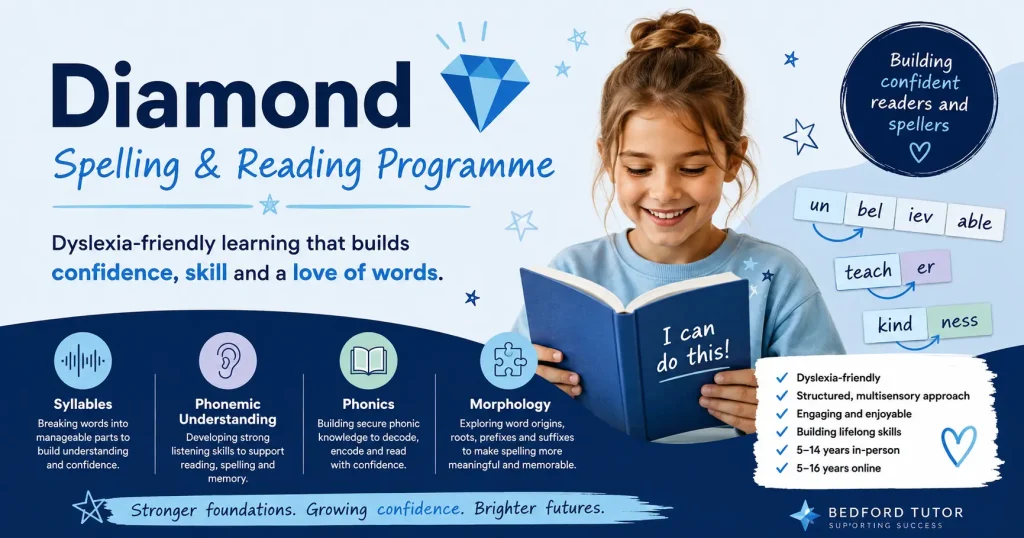
    • Breaking words into syllables
    • Exploring vowel sounds and spelling patterns
    • Using magnetic letters and word-building activities
    • Creating visual memory prompts
    • Drawing pictures to represent difficult words
    • Using games and interactive learning activities

    When children can physically interact with language, learning often becomes more accessible and far less intimidating. This approach has proven particularly effective for many of the dyslexic learners I support through personalised tuition.

    Supporting Dyslexic Learners Overseas

    Families living overseas often face an additional challenge: finding specialist support.

    Whilst many international schools provide excellent learning support services, access can vary considerably between countries and schools.

    One of the reasons online tuition has become increasingly valuable is that geography no longer limits access to specialist support. Over the years, I have worked with dyslexic learners across the UK and internationally, helping students develop literacy skills whilst building the confidence needed to succeed in their chosen curriculum.

    Whether a child is studying the British Curriculum, American Curriculum, preparing for GL Assessments or following another international programme, personalised support can make a significant difference.

    Final Thoughts

    Dyslexia should never be viewed as a barrier to success.

    Some of the most creative, innovative and accomplished individuals throughout history have been dyslexic. The key is ensuring that learners receive the support, encouragement and strategies that allow their strengths to shine.

    International schools offer incredible opportunities for young people. When dyslexic learners are understood, supported and given access to appropriate teaching approaches, they can flourish both academically and personally.

    After all, success is not about learning exactly like everyone else. It is about finding the approach that allows each child to thrive.

    Here at Bedford Tutor, I have supported many dyslexic learners attending international schools across the UAE, Singapore, Malaysia, Thailand, Saudi Arabia and beyond. Through personalised English tuition, multi-sensory learning approaches and confidence-building strategies, I help children develop the literacy skills they need whilst ensuring they feel understood, capable and successful. Whether a student is following the British Curriculum, American Curriculum, preparing for GL Assessments or receiving home education support, my aim is always to help them discover that dyslexia does not limit their potential.

    To find out more, please click on the relevant links below:

    Bel 😊


    Related Posts