Bedford, UK


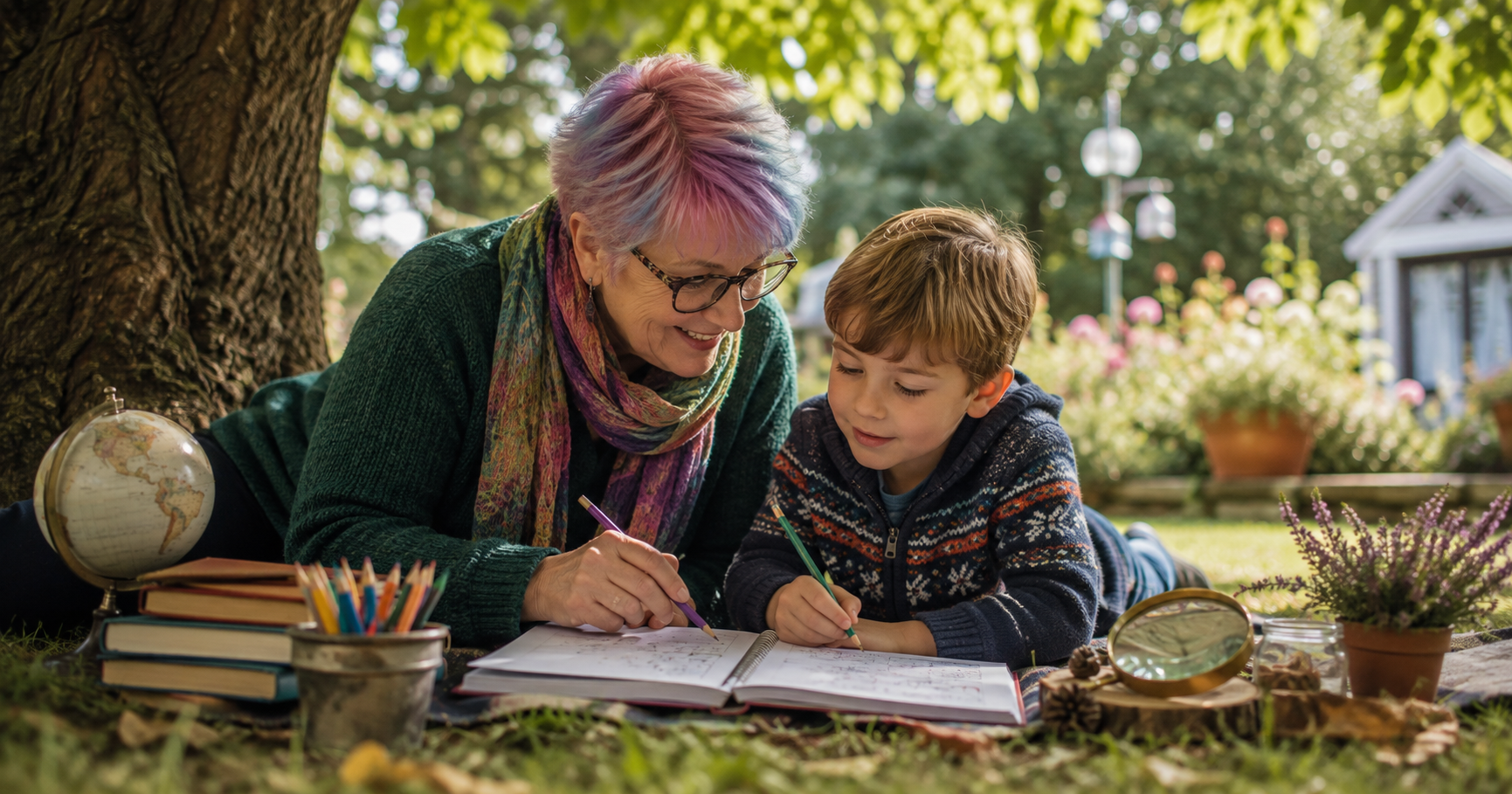
Home education offers something that traditional schooling cannot always provide: freedom.
Freedom to slow down when something is difficult. Freedom to explore an unexpected interest. Freedom to spend a morning outside, learn through conversation or return to a subject when a child is ready.
But there can also be a funny little trap.
Once you have made the decision to home educate, it is very easy to feel that you now have to recreate school at home.
There are timetables. Worksheets. Workbooks. Spelling lists. Tests. Perhaps even a small desk in the corner which slowly begins to resemble a miniature classroom.
And whilst structure can be incredibly helpful, particularly for some children, home education does not have to feel like school.
In fact, for many children, particularly those with ADHD, dyslexia, dyscalculia, autism or low confidence, one of the greatest advantages of home education is being able to find a way of learning which feels natural to them.
Home education does not need to look like school
One of the things I love most about supporting home-educated children is the freedom to adapt learning.
Over the years, I have worked with home-educated learners across the UK and internationally, and I have seen just how different their educational journeys can be. Some children love routine and feel reassured by knowing exactly what will happen next. Others become much more engaged when learning is flexible, creative and connected to their interests.
Neither approach is wrong.
The important thing is finding what works for the child.
A child who loves dinosaurs might practise reading by exploring dinosaur facts. A child fascinated by baking can develop mathematical skills through weighing ingredients and working with fractions. Another child might discover that writing becomes much easier when they are allowed to create a story about their favourite game or animal.
The learning is still happening.
It simply does not always look like a traditional lesson.
Follow the interest
One of the simplest ways to make learning feel less like school is to pay attention to what your child is already interested in.
This does not mean abandoning the curriculum.
It means using curiosity as the doorway into it.
If your child is fascinated by space, for example, you might explore non-fiction reading, new vocabulary, descriptive writing, research skills and even mathematical problems involving planets.
If they love animals, you could read animal stories, compare sizes and measurements, write descriptions, create charts or investigate habitats.
Children are often far more willing to practise a skill when they can see a reason for using it.
This is particularly valuable for children who have previously struggled with motivation or confidence. In Kite Tutoring sessions, I regularly use games, challenges, creative activities and discussion because engagement is often the key to successful learning.
Learning through play is still learning
Sometimes parents worry that if learning is fun, it cannot possibly be rigorous.
I understand why.
We are used to thinking about education as something which happens at a desk, with a pencil in one hand and a worksheet in the other.
But children can learn an enormous amount through play, conversation and practical experiences.
A game involving money can develop mathematical reasoning. Building something can involve measurement, planning and problem-solving. Playing a word game can strengthen vocabulary and spelling. Cooking can involve fractions, sequencing and reading instructions.
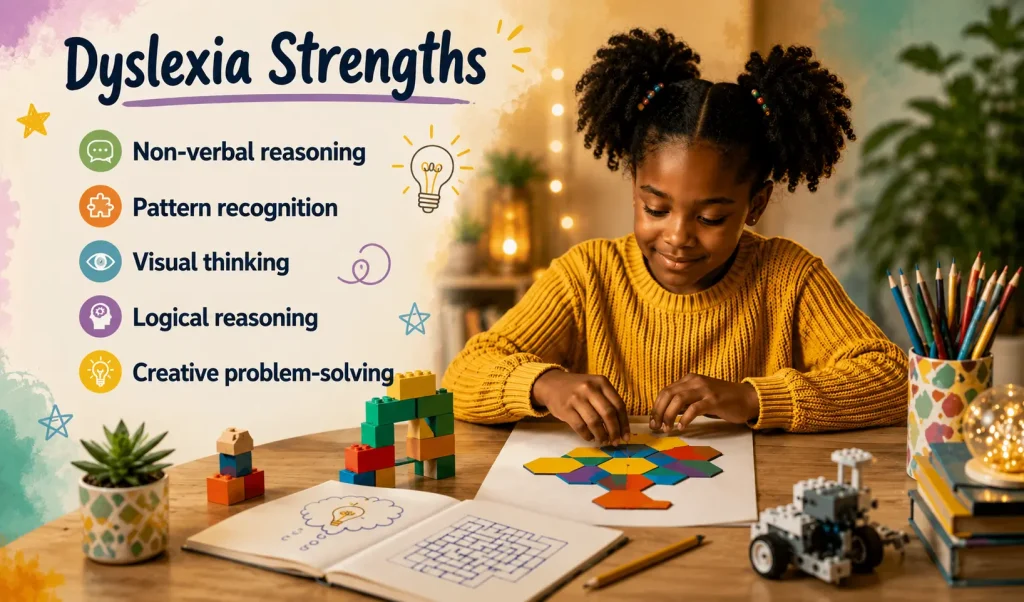
For some dyslexic learners, making words physically using magnetic letters, wooden blocks or other hands-on resources can make learning much more meaningful than simply copying words from a page. Creative associations and visual approaches can also help ideas stick.
The activity may look like play.
Underneath it, there may be a great deal of learning taking place.
Do not be afraid of flexibility
One of the greatest advantages of home education is being able to learn at the child’s pace.
Perhaps your child understands fractions immediately but needs several weeks to become comfortable with spelling.
Perhaps they are full of energy in the morning but concentrate beautifully after lunch.
Perhaps they need movement between activities rather than sitting still for an hour.
Home education gives families the opportunity to respond to those differences rather than constantly asking the child to fit a predetermined timetable.
This can be especially helpful for neurodivergent learners.
Children with ADHD, for example, may benefit from movement, visual resources, interactive activities and smaller chunks of learning. Others may need additional processing time, practical examples or opportunities to revisit a concept without feeling that they have fallen behind.
The aim is not to remove structure completely.
It is to create the right structure.
Keep some routine, but leave room to breathe
Interestingly, making learning feel less like school does not necessarily mean having no routine.
Some children thrive on predictability.
A simple rhythm to the day can provide reassurance: breakfast, reading, outdoor time, maths, lunch, creative activity, perhaps some independent work.
The key is allowing the routine to breathe.
If an interesting conversation develops over breakfast, perhaps that becomes part of the day’s learning.
If your child is deeply absorbed in a project, perhaps you do not need to stop simply because the timetable says it is time to move on.
And if everyone is exhausted, sometimes the most sensible educational decision is to step away from the books.
Learning does not stop because the timetable does.
Protect confidence as carefully as you protect progress
This is something I feel particularly strongly about.
Academic progress matters, but so does the child’s relationship with learning.
Many children arrive at home education after difficult experiences in traditional educational environments. Some have begun to believe that they are “bad” at reading, maths or school generally.
That can take time to undo.
For these children, success might initially look very small.
Reading a paragraph without giving up.
Attempting a difficult maths problem.
Writing three sentences independently.
Asking for help instead of saying, “I can’t do it.”
These moments matter.
When children feel understood and supported, they are more willing to make mistakes, ask questions and take risks with their learning. Our approach at Kite Tutoring is deliberately strengths-based, with the aim of helping learners feel capable as well as developing their academic skills.
Confidence is not an optional extra.
It is part of learning.
What if my child still needs academic support?
Home education does not mean parents have to do everything alone.
Sometimes a child simply needs another person who understands their learning profile and can provide additional structure without recreating the school environment.
One-to-one tuition can be particularly useful when lessons are personalised around the child’s pace, interests and strengths. Online learning can also provide flexibility for home-educated families, including those living overseas or following British, American or international programmes.
The important thing is that additional tuition should complement home education rather than turning it into another version of school.
A good lesson might involve discussion, games, visual explanations, practical activities and plenty of encouragement alongside the academic content.
There is room for both learning and enjoyment.
Home education is allowed to be different
Perhaps the most important thing I would say to any parent beginning or continuing a home education journey is this:
You do not have to prove that your child is learning by making home look like school.
Education can happen around the kitchen table, on a walk, through a conversation, during a game, while cooking or through a subject that your child suddenly becomes completely fascinated by.
Of course, there will be times when structured learning is important. There may be qualifications to work towards, specific English or maths skills to develop, or Functional Skills assessments to prepare for.
But even then, learning does not have to become joyless.
After all, the whole point of home education is often to create an educational experience which genuinely meets the needs of the individual child.
Sometimes the most successful learning happens when we stop asking, “How can I make this look like school?” and start asking, “How can I help my child learn in a way that works for them?”
A little support can make a big difference
Here at Kite Tutoring, the online division of Bedford Tutor, we have supported home-educated learners across the UK and around the world for many years. From English and Maths to Functional Skills and personalised learning programmes for children with ADHD, dyslexia, dyscalculia and autism, our approach is flexible, engaging and centred around the individual learner.
For many families, the aim is not simply to cover the curriculum. It is to help a child rediscover confidence, curiosity and enjoyment in learning.
If you are looking for additional support as part of your home education journey, we would be very happy to have a conversation about what might work for your child.
Bel 😊