• Moving Abroad With an ADHD Child: How to Support a Smooth Transition

    Moving abroad is an exciting adventure. New countries, new cultures, new opportunities and experiences can open doors for children in remarkable ways.

    However, when your child has ADHD, an international move can bring additional challenges that are sometimes overlooked.

    Over the years, I have worked with many families who have relocated overseas, particularly to countries such as the UAE, Saudi Arabia, Singapore, Malaysia and Thailand. Whilst every family’s journey is unique, one theme appears time and time again: children with ADHD often need more support with transitions than people realise.

    As someone with ADHD myself, I completely understand why.

    Why Moving Abroad Can Feel Overwhelming

    Many children with ADHD thrive on familiarity, even if they appear adventurous on the surface.

    A move overseas often involves:

    • Leaving friends behind
    • Starting a new school
    • Adapting to different routines
    • Navigating cultural differences
    • Managing uncertainty

    For neurotypical children, these changes can be challenging enough. For an ADHD child, they can feel like someone has shaken up every part of their world at once.

    I often compare it to trying to complete a jigsaw puzzle whilst somebody keeps changing the picture on the box.

    Many ADHD children work incredibly hard to stay organised, manage emotions and navigate everyday life. When familiar structures disappear, it can temporarily increase anxiety, emotional outbursts, forgetfulness and difficulties with concentration.

    Remember: Every ADHD Child Is Different

    One of the biggest misconceptions about ADHD is that all children experience it in the same way.

    They don’t.

    Some children become highly anxious before a move. Others seem completely relaxed until several weeks later when the reality begins to sink in. Some throw themselves into new experiences immediately, whilst others need time to observe and adjust before they feel comfortable.

    This is something I feel strongly about because ADHD is incredibly diverse. No two ADHD children are exactly alike, and understanding your individual child is always more important than following generic advice.

    Preparing Before You Move

    One of the most effective ways to reduce anxiety is to involve your child in the process early.

    Talk openly about:

    • Where you are moving
    • What their new school looks like
    • What daily life might be like
    • The exciting opportunities ahead

    Many ADHD learners benefit from visual preparation.

    Photos, videos, maps and virtual tours can help transform an unknown destination into something more familiar and manageable.

    If possible, create a countdown calendar so your child can clearly see when different events will happen. Predictability often helps reduce uncertainty.

    Supporting School Transitions

    Starting a new school can be one of the biggest worries for ADHD learners.

    International schools can vary significantly in their approach to supporting neurodivergent students. Before moving, it can be helpful to discuss:

    • Available SEND support
    • Classroom accommodations
    • Communication systems
    • Homework expectations
    • Pastoral care

    The earlier these conversations happen, the smoother the transition is likely to be.

    Many families also find that maintaining some educational continuity through online tuition can provide reassurance during this period. Having one familiar adult, one familiar routine and one consistent learning space can make a tremendous difference when everything else feels new.

    Expect an Adjustment Period

    One mistake parents sometimes make is assuming that a child who appears happy has adjusted immediately.

    In reality, ADHD children can take time to process major life changes.

    I often tell families that settling into a new country is a marathon, not a sprint.

    There may be emotional ups and downs along the way.

    Your child may initially love their new environment and then suddenly miss home several months later. This is completely normal.

    Give them space to talk about their feelings without trying to “fix” everything straight away.

    Sometimes children simply need someone to listen.

    Focus on Confidence First

    Whenever I support a child through a significant transition, confidence becomes my priority.

    Academic progress is important, but confidence is often the foundation that makes everything else possible.

    When children feel safe, understood and capable, they are far more likely to engage with learning, build friendships and embrace new experiences.

    Small successes matter.

    • Making one new friend.
    • Finding their way around school.
    • Trying a new activity.
    • Completing a piece of work independently.

    These moments gradually build a sense of belonging.

    Final Thoughts

    Moving abroad with an ADHD child can feel daunting, but it can also be an incredible opportunity for growth.

    With patience, preparation and understanding, many ADHD learners develop remarkable resilience through international experiences.

    The goal is not to remove every challenge.

    The goal is to provide enough support that your child feels confident navigating those challenges for themselves.


    After all, children with ADHD are often wonderfully adaptable, creative and resourceful. Sometimes they simply need a little extra time and reassurance whilst finding their feet in a brand-new world.

    Here at Bedford Tutor, I have supported many children with ADHD who have relocated overseas or attend international schools across the UAE, Saudi Arabia, Singapore, Malaysia and Thailand. Through personalised English and maths tuition, confidence-building support and ADHD-friendly learning strategies, I help students navigate educational transitions whilst continuing to develop the skills they need to thrive.

    To find out more, please click on the relevant link below:

    Bel 😊



    Related Posts

  • Educating at Home: What are the Benefits?

    Home education is a journey that looks different for every family.

    Over the years, I have worked with many home-educated learners across the UK and around the world, and one thing has become increasingly clear: there is no single “right” way to educate a child. What matters most is finding an approach that works for the individual learner.

    Some children thrive when learning follows a structured timetable. Others flourish when lessons are shaped around their interests, curiosity and natural pace of development. One of the greatest strengths of home education is the flexibility it offers families to create a learning experience that truly meets their child’s needs.

    Every Child Learns Differently

    One of my favourite things about supporting home-educated students is seeing how unique each learner really is.

    I have worked with children who can discuss complex scientific ideas for hours yet need additional support with writing. I have taught students who excel in mathematics but lack confidence when reading aloud. I have also supported many neurodivergent learners whose strengths and challenges don’t always fit neatly into traditional educational expectations.

    As someone with ADHD myself, I understand that learning differences can sometimes make education feel challenging. However, I also know that when children are given the right support and encouragement, those same differences can become incredible strengths.

    Home education allows parents to build learning around the child rather than expecting the child to fit into a predetermined system.

    Building Confidence in English

    For many home-educated learners, confidence is just as important as academic progress.

    English can feel overwhelming for children who struggle with reading, spelling or writing. This is particularly true for learners with dyslexia, ADHD or autism, who may have experienced frustration in previous educational settings.

    I often tell parents that reading confidence develops much like growing a plant. Progress can sometimes seem slow at first, but with consistent nurturing, encouragement and patience, remarkable growth begins to appear.

    One of the most effective ways to develop English skills is through genuine enjoyment. Children who discover books, stories and topics that genuinely interest them are often far more motivated to read. Whether it’s a book about dinosaurs, space, animals or computer games, enthusiasm is a powerful learning tool.

    Writing confidence also improves when children feel safe making mistakes. Some of the best creative writing I’ve seen has come from students who were encouraged to focus on expressing their ideas before worrying about perfect spelling and punctuation.

    Making Maths Less Intimidating

    Mathematics can sometimes create anxiety for both children and parents.

    I frequently meet learners who believe they are “bad at maths” when, in reality, they simply haven’t found an approach that works for them yet.

    Home education provides the opportunity to slow down when necessary and revisit concepts without the pressure of keeping pace with a large class. This can be particularly beneficial for learners with dyscalculia or those who need additional time to process mathematical ideas.

    I often use practical examples, games and visual resources to help children understand mathematical concepts. When maths becomes something children can see, touch and relate to everyday life, it often feels far less intimidating.

    One student I worked with struggled to understand fractions until we began using pizza slices and baking activities as part of our lessons. Suddenly, the abstract concept became something tangible and meaningful.

    Moments like these remind me that successful teaching is often about finding the explanation that clicks.

    Supporting Neurodivergent Home-Educated Learners

    Many families choose home education because traditional school environments have not fully met their child’s needs.

    For learners with ADHD, autism, dyslexia or dyscalculia, personalised education can be transformative.

    Some children benefit from movement breaks and highly interactive lessons. Others need information presented visually or broken into smaller, manageable chunks. Many simply need the freedom to learn at a pace that reduces anxiety and allows confidence to grow naturally.

    The beauty of home education is that these adaptations can become part of everyday learning rather than special exceptions.

    The Power of Personalised Learning

    One of the greatest advantages of home education is the opportunity to celebrate progress without comparison.

    Children develop at different rates, and learning is rarely a straight line. There will be periods of rapid progress and moments when things feel slower. Both are completely normal.

    When children feel understood, valued and supported, they become more willing to take risks, ask questions and persevere through challenges.

    That confidence often becomes the foundation for long-term success in both English and maths.

    After all, education isn’t simply about covering curriculum content. It’s about helping children develop the skills, knowledge and self-belief they need to thrive.

    Here at Bedford Tutor, I have supported home-educated learners across the UK and around the world for many years. Whether a child needs help developing confidence in English, strengthening mathematical understanding, preparing for Functional Skills qualifications or accessing personalised support for ADHD, dyslexia, dyscalculia or autism, I aim to create engaging lessons that meet learners where they are and help them move forward with confidence.

    To find out more, please click on the relevant link below:

    Bel 😊


    Related Posts

  • Supporting Home-Educated Children in English and Maths

    Home education has become increasingly popular in recent years and, having worked with home-educated learners for many years, I have seen first-hand how effective personalised learning can be.

    One of the things I love most about working with home-educated students is the freedom to adapt learning to the individual child. Every learner is different. Some children race ahead in certain subjects whilst needing more time in others. Some thrive with structure and routine, whilst others flourish when lessons are creative, flexible and shaped around their interests.

    Over the years, I have supported home-educated students from all over the UK and from countries across the world. Although every family has chosen home education for different reasons, they often have one thing in common: a desire to provide a learning experience which truly meets the needs of their child.

    My own journey into online tuition expanded significantly during the COVID-19 pandemic. Whilst the world was adjusting to remote learning, I was helping a large number of children continue their education online. What began as a necessity quickly revealed something surprising. Many children actually thrived in a one-to-one online environment. Without the distractions of a busy classroom, they were often more confident, more engaged and more willing to take risks in their learning.

    Since then, online tuition has become a major part of my work and I now support home-educated learners in a variety of locations, helping them develop confidence in both English and mathematics.

    One of my priorities is always to make lessons enjoyable.

    Learning should be engaging, particularly when children are working one-to-one. Whilst it is important to cover key curriculum content and develop essential skills, I strongly believe that children learn best when they are interested in what they are doing. For this reason, I regularly use games, challenges, creative activities and discussion-based learning to bring lessons to life.

    As someone who works with many neurodivergent learners, I know that engagement is often the key to success.

    I currently support home-educated students with ADHD, dyslexia, dyscalculia and autism. Many of these children have previously found traditional educational environments challenging and benefit from a more personalised approach. Rather than expecting every learner to fit a particular mould, I adapt lessons to suit the child sitting in front of me.

    For some students, this means incorporating movement, visual resources and highly interactive activities. For others, it may involve breaking learning into smaller chunks, developing confidence gradually or exploring concepts through practical examples.

    Alongside English and mathematics tuition, I also currently support students working towards Functional Skills English and Functional Skills Maths qualifications. These qualifications provide valuable pathways for many learners and can help build confidence whilst developing essential life skills.

    One of the greatest advantages of home education is the ability to learn at the right pace. There is often more time to revisit areas of difficulty, explore personal interests and celebrate progress without the pressure that can sometimes accompany traditional schooling.

    Whether a child is preparing for Functional Skills qualifications, developing confidence in literacy and numeracy, or simply benefiting from additional support as part of their home education journey, personalised online tuition can provide valuable structure, encouragement and expertise.

    Most importantly, I believe that every child deserves to feel successful.

    When children feel understood, supported and confident in their abilities, remarkable things can happen. My goal is always to create lessons which are engaging, encouraging and tailored to the unique strengths and needs of each learner.

    After all, successful education is not about forcing every child down the same path. Sometimes it is about finding the path which works best for them.

    Here at Bedford Tutor, I have supported home-educated learners across the UK and around the world for many years. From Functional Skills English and Maths to personalised learning programmes for children with ADHD, dyslexia, dyscalculia and autism, I have developed a flexible and engaging approach that helps students build confidence whilst developing the essential skills they need to thrive.

    To find out more, please click on the relevant link below:

    Bel 😊


    Related Posts

  • Supporting Dyslexic Learners at Home

    When a child is diagnosed with dyslexia, many parents experience a mixture of emotions.

    For some, there is relief. Finally, there is an explanation for why reading, spelling or writing has felt so much harder than expected. For others, there is worry.

    How can I help my child?
    Will they ever become a confident reader?
    What should we be doing at home?

    The good news is that dyslexic children can absolutely thrive.

    Over the years, I have worked with many learners with dyslexia and one thing has become incredibly clear to me: the most effective support rarely looks like endless worksheets and repetitive drills. In fact, some of the best learning happens when children are actively involved, using their hands, their imagination and their creativity.

    Many dyslexic learners are naturally curious, creative and highly capable thinkers. However, because reading and spelling can require so much effort, they can sometimes begin to doubt their abilities. This is why praise is so important.

    I cannot overstate the power of helping a child recognise their own progress.

    When a child has spent years feeling as though they are falling behind, celebrating small successes can make a remarkable difference. Sometimes learning confidence grows in tiny increments, like drops of water filling a bucket. One correctly-spelled word. One successful reading activity. One moment when a child suddenly realises, “Actually, I can do this.”

    These moments matter.

    At Bedford Tutor, our Diamond Spelling & Reading Programme was designed with this philosophy in mind. Rather than expecting children to memorise endless lists of spellings, we help them understand how words actually work.

    One area we focus on heavily is syllables.

    Many struggling readers see long words as giant mountains standing in their path. However, when children learn to break words into syllables, those mountains often become a series of smaller hills. Suddenly, words which once looked overwhelming begin to feel much more manageable.

    We also spend a great deal of time exploring vowel sounds.

    English spelling can sometimes feel wonderfully logical and completely chaotic at exactly the same time. As children begin to understand how vowel sounds influence spelling patterns, many start to recognise that there are actually reasons behind many spellings. Whilst English certainly has its fair share of exceptions, understanding common spelling rules helps children approach unfamiliar words with greater confidence.

    Most importantly, we make learning physical.

    Many dyslexic learners benefit enormously from seeing, hearing, saying and physically manipulating words.

    This is why we regularly use play dough, wooden blocks, magnetic letters and other hands-on resources to build words physically. Rather than simply looking at a word on a page, children can hold it, move it, change it and explore how it works. Learning becomes something tangible rather than something abstract.

    I often find that once a child can physically construct a word, they begin to understand it in a completely different way.

    Creativity also plays a huge role in our sessions.

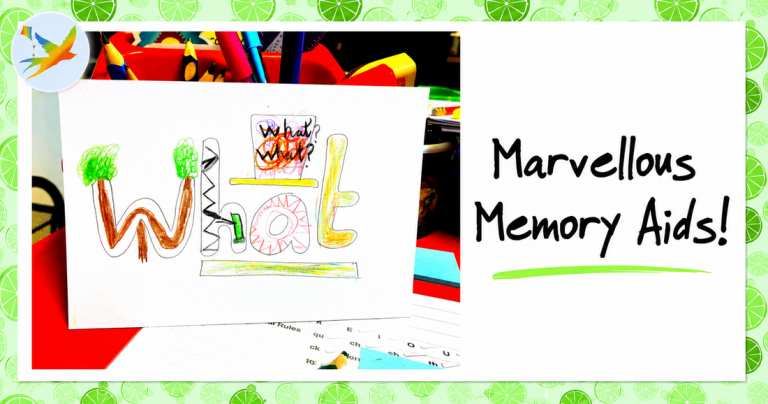
    One of my favourite approaches involves turning words into pictures.

    For example, if we are exploring the word “what”, we might notice that it contains the word “hat”. Suddenly, we can draw a hat directly onto the letters. The word becomes more memorable because it is no longer just a collection of symbols. It becomes an image, a story and an idea.

    Dyslexic learners are often wonderfully visual thinkers and these creative associations can help words stick in the memory far more effectively than simple repetition.

    Over the years, I have seen children transform their confidence through approaches like these. Not because they suddenly become perfect spellers overnight, but because they begin to understand that reading and spelling are skills they can learn.

    Supporting a dyslexic learner at home is not about creating a second school environment. It is about nurturing confidence, celebrating effort and helping children discover strategies which work for their unique brains.

    After all, dyslexia is not a lack of intelligence. Some of the most creative, innovative and inspiring people throughout history have been dyslexic. Sometimes children simply need the right tools, the right encouragement and someone who believes in them long before they learn to believe in themselves.

    When we combine understanding, creativity and plenty of praise, remarkable things can happen.

    Here at Bedford Tutor, we have been supporting children with dyslexia and related special educational needs for over fourteen years. Through working with hundreds of learners, I have developed a highly creative and multi-sensory approach which helps children build confidence whilst developing the key literacy skills they need to succeed.

    To find out more, please click on the link below:


    Bel 😊


    Related Posts

  • How to Choose an Online Tutor for a Child with ADHD

    As an ADHDer myself, I completely understand the struggle.

    Whilst ADHD children are often some of the most creative, imaginative and intuitive learners you’ll ever meet, we’re not exactly famous for our ability to sit still and focus on something we find boring. Give us a topic that captures our imagination and we can disappear down a rabbit hole for hours. Ask us to complete a repetitive task that doesn’t spark our interest and our attention can evaporate faster than a puddle on a hot summer’s day.

    I should know.

    As a child, I loved learning, but only when it grabbed my attention. If a lesson fired up my imagination, I was completely invested. If it didn’t, my thoughts would quickly wander elsewhere. Looking back, I can see that I wasn’t being lazy or difficult. My ADHD brain simply needed a different approach.

    That’s why I believe tutoring for children with ADHD should always work with their natural way of thinking rather than against it.

    Of course, we need to prepare young people for a world which often demands organisation, resilience and sustained effort. However, that doesn’t mean tuition should feel like an exercise in corporate boardroom levels of concentration.

    ADHD learners are distractible, impulsive and prone to wandering thoughts, but we’re also incredibly curious, creative and capable of making connections that other people sometimes miss.

    When looking for an online tutor for a child with ADHD, there are three things I would always recommend considering.

    A Tutor Who Offers Flexible Session Lengths

    Many children with ADHD find long lessons exhausting.

    Whilst some students thrive during hour-long sessions, others achieve far more during shorter, highly-focused lessons. For some children, thirty minutes of engaging learning can be significantly more productive than an hour spent battling mental fatigue.

    Every child is different, but flexibility is important. A good tutor should be willing to adapt lesson length to suit the learner rather than expecting every student to fit the same model.

    A Tutor Who Makes Learning Interesting

    One of the most important things to understand about ADHD is that we have interest-driven nervous systems.

    When something genuinely interests us, learning happens naturally. When it doesn’t, maintaining attention can feel like trying to catch smoke with a butterfly net.

    This is why engagement matters so much.

    Look for a tutor who brings energy, creativity and enthusiasm into their teaching. Games, discussion, humour, challenges and interactive activities can transform learning from something a child has to do into something they genuinely enjoy.

    In my experience, if a child looks forward to their tuition sessions, you’ve probably found the right tutor.

    A Tutor Who Sees The Whole Child

    Whilst academic progress is often the reason parents initially seek tuition, successful learning involves much more than grades and test scores.

    Many children with ADHD struggle with confidence. After years of forgotten homework, careless mistakes and being told they need to “try harder”, some begin to doubt their own abilities.

    The right tutor should recognise strengths as well as difficulties.

    They should understand that motivation is often linked to personal interests and that confidence can be just as important as academic knowledge. They should also appreciate that ADHD frequently exists alongside other differences, including anxiety, autism, dyslexia and sensory processing challenges.

    Most importantly, they should see your child as a unique individual rather than a list of symptoms.

    Finding The Right Fit

    There is no such thing as the perfect tutor for every ADHD child because there is no such thing as a typical ADHD child.

    Some are quiet dreamers. Others are energetic whirlwinds. Some love structure, whilst others thrive on flexibility. What works brilliantly for one child may be completely ineffective for another.

    The best tutors understand this.

    Rather than trying to change how an ADHD child thinks, they help them understand their strengths, develop strategies for their challenges and build confidence in their own abilities.

    After all, ADHD isn’t a lack of potential. Sometimes it’s simply a different way of seeing the world.

    Here at Bedford Tutor, we have been working with children who have ADHD for over fourteen years; being neurodivergent myself has helped me create a style of tuition that works to the strengths of the ADHD brain.

    ​To find out more, please click on the link below:

    Bel 😊


    Related Posts